Emergency Water Damage Restoration in New Brunswick, NJ
Water in your home or business in New Brunswick is an emergency. Call now, tell us what happened, and we explain the scope and price before work starts. We extract the water, dry the structure and repair the damage.
- Scope and price explained before work starts
- Serving New Brunswick and nearby towns
- Licensed and insured
At a glance
Water damage restoration in New Brunswick, NJ
Water damage restoration is the work of stopping the source, removing standing water, drying the structure and repairing what could not be saved. In New Brunswick that work happens in older rowhouses near the Raritan River, apartment buildings around Rutgers University and commercial buildings downtown.
A burst pipe, a failed water heater, a roof leak and river flooding all start the same clock. Wet drywall, insulation and subfloor begin to break down quickly, and the EPA advises drying wet materials within 24 to 48 hours to limit mold growth. That is why an emergency call matters more than a perfect plan.
Our call line is open 24/7 for emergency water damage in New Brunswick, including nights, weekends and holidays. Call (732) 352-9660, tell us where the water is, and we explain what happens next before any work starts.
Emergency water damage in New Brunswick
Burst pipe, flooded basement or sewage backup? Call now. The line is open 24/7.
Water damage services in New Brunswick, NJ
Every job starts the same way. Find the source, remove the water and measure what is wet. Start with the most requested services below or browse by cause. The full list is on the [[services|services page]].
Pipes and plumbing
Supply lines, water heaters and frozen pipes cause the fastest floods. See burst pipe damage, frozen pipe damage, water heater leaks and slab leaks.
Appliances and HVAC
Machines that use water leak where nobody looks. See appliance leaks, AC leaks and kitchen water damage.
Weather and building envelope
Rain, runoff and river water enter through roofs, walls and foundations. See storm damage, ceiling leaks, basements and crawl spaces.
Water removal and drying
Pumps, extractors and dehumidifiers do the core work. See water extraction, structural drying and sewage backup cleanup.
Floors and walls
Finished surfaces show the damage and hide the moisture. See hardwood floors, carpet and walls and drywall.
Business and mold
Commercial buildings add tenants and shared plumbing. Mold follows lingering moisture. See commercial water damage and mold remediation.
What to do in the first hour of water damage
- Get everyone to a dry, safe spot. Stay out of rooms where water has reached outlets, appliances or the electrical panel. If you can reach the main breaker without stepping in water, switch off power to the wet area.
- Stop the source if it is safe. Close the main water valve, the shutoff under the fixture or the water heater supply. A frozen or hidden leak may keep running until a valve is closed.
- Photograph the damage. Take wide and close photos of the water, the ceiling and the affected belongings before anything is moved. Your insurer will ask for them.
- Call the emergency line. Our line is open 24/7. Tell us what caused the water, how deep it is and which floors are wet. We explain the next step and the scope before work starts.
- Protect what you can carry. Lift small furniture, rugs and electronics onto dry surfaces, and open cabinet doors to let air in. Skip the household vacuum and stay clear of any ceiling that sags.
How emergency water damage restoration works
Call and triage
You describe the source and the rooms. We sort clean supply leaks from floodwater and sewage, because they need different handling.
Inspect and measure
Moisture meters and thermal imaging show where water traveled inside walls and floors, not just where it is visible.
Extract and dry
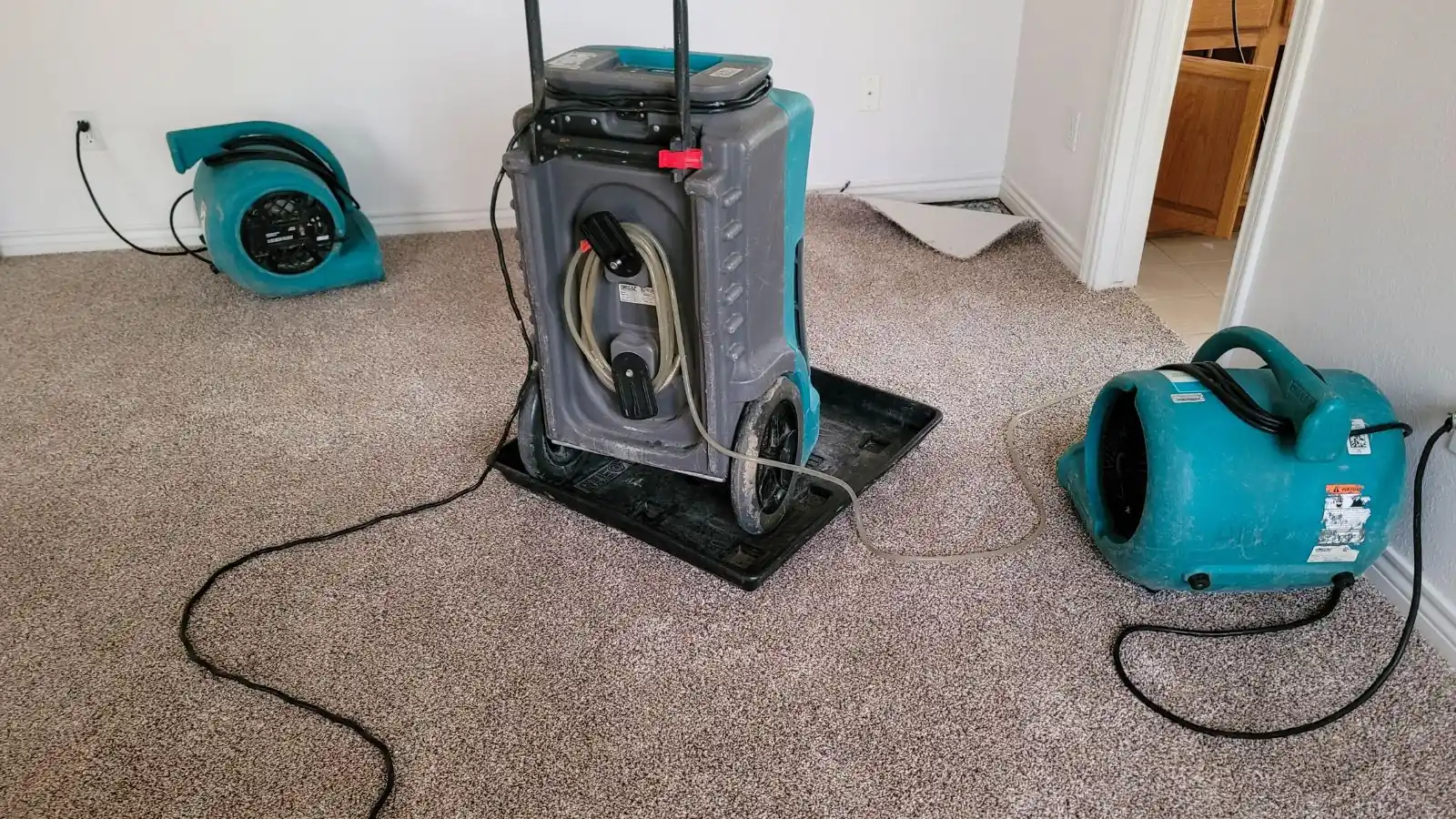
Pumps remove standing water. Air movers and dehumidifiers dry the structure until the readings return to normal.
Repair and verify
Damaged drywall, flooring and insulation are replaced, and final moisture readings confirm the structure is dry.
Why New Brunswick property owners call our line
Scope and price first
You hear the scope and the price before work starts, so there are no surprises on site.
Extraction through repair
One company covers water removal, drying, mold control and rebuild work.
Readings and photos
Moisture readings and photos are recorded as the job progresses, which helps with insurance paperwork.
Licensed and insured
We carry the licensing and insurance that New Jersey property owners should ask any contractor about.
How the Raritan River and city housing shape water damage here
New Brunswick sits on the south bank of the Raritan River, and the river is the city's main flood story. During Hurricane Ida in 2021, the Raritan overtopped its banks after 8 to 8.4 inches of rain fell on the city, according to the City of New Brunswick. Route 18, River Road and the Albany Street Bridge closed, and Rutgers closed Alexander Library.
Patch reported that about 1,000 people were evacuated across New Brunswick and Piscataway. Floodwater that reaches a basement from outside is not clean water, so it is handled as contaminated until proven otherwise.
Neighborhoods such as the Fifth Ward, Feaster Park, Raritan Gardens, Edgebrook and Westons Mills face the same mix of problems as the rest of the city. Heavy rain seeps into basements, supply lines fail, water heaters leak and drains back up.
The city's tap water is surface water supplied by the New Brunswick Water Utility. A leak from a clean supply line is treated differently from floodwater or a sewer backup, and sorting that out is the first thing we do on the phone.
Insurance and your water damage claim
Standard homeowners policies in New Jersey generally exclude flood damage. Flood coverage needs a separate policy through the National Flood Insurance Program or a private insurer, according to the New Jersey Department of Banking and Insurance. Check your policy for what it covers, and ask your insurer about mold coverage before you file.
Hiring a water damage contractor in New Jersey
New Jersey requires home improvement contractors to register with the Division of Consumer Affairs. Registration numbers begin with 13VH, written contracts are required for work above $500, and registration is not an endorsement of quality. A contractor who asks for more than a third of the payment before work begins is a warning sign.
Two published standards guide professional work. ANSI/IICRC S500 covers water damage restoration and S520 covers mold remediation. Ask any company whether its crews work to them.
When repair or rebuild work is part of your water damage job, ask for the contractor's registration number and a written scope. For permit questions, ask the city's Construction Department.
Serving New Brunswick and nearby towns
- 08901
- 08903
- 08906
- 08933
- 08989
We answer calls for New Brunswick ZIP codes 08901, 08903, 08906, 08933 and 08989 and for the surrounding towns. The service area page covers local details for each.
Neighborhoods We Serve
Local notes for parts of New Brunswick where people call about water damage. Each page explains the area and what to tell us.
Water damage questions from New Brunswick property owners
Yes. Our call line is open 24/7, including nights, weekends and holidays. Call (732) 352-9660, describe where the water is and what caused it, and we explain the next step on the phone.
If the water is near electrical outlets, a panel or a sagging ceiling, leave the area first and call from a dry room.
Stay out of rooms where water has reached outlets or appliances. Stop the source if you can, such as the main water valve, a supply shutoff or the water heater valve. Photograph the damage before you move anything, then call us.
Do not use a household vacuum on standing water, and do not walk under a ceiling that is bulging or dripping.
The EPA advises drying wet materials within 24 to 48 hours to limit mold growth, because mold needs moisture to grow. Once drywall, insulation or carpet stays wet past that window, the risk rises.
That is why we start water extraction and drying quickly. If mold is already visible, see our mold remediation page.
It depends on the cause and on your policy. Standard homeowners policies generally exclude flood damage, which needs separate flood insurance through the National Flood Insurance Program or a private insurer, according to the New Jersey Department of Banking and Insurance.
Sudden internal leaks, such as a burst pipe, are often treated differently. Read your policy or ask your insurer, and keep photos and records of the damage.
Cost depends on the water category, how much area is wet, which materials are affected and how long the water sat. We do not quote a price blind. We look at the scope and explain the price before work starts.
Yes. We respond to offices, shops, restaurants and multi-unit buildings. See commercial water damage restoration for how we handle occupied buildings and tenant issues.
We serve New Brunswick and nearby towns including South River, Highland Park, Piscataway, North Brunswick, Edison, East Brunswick, Milltown, Somerset and Sayreville. The service area page lists ZIP codes and local details.
Water damage in New Brunswick? Call now
Our emergency line is open 24/7. Tell us where the water is and we explain the scope and price before work starts.
Call (732) 352-9660