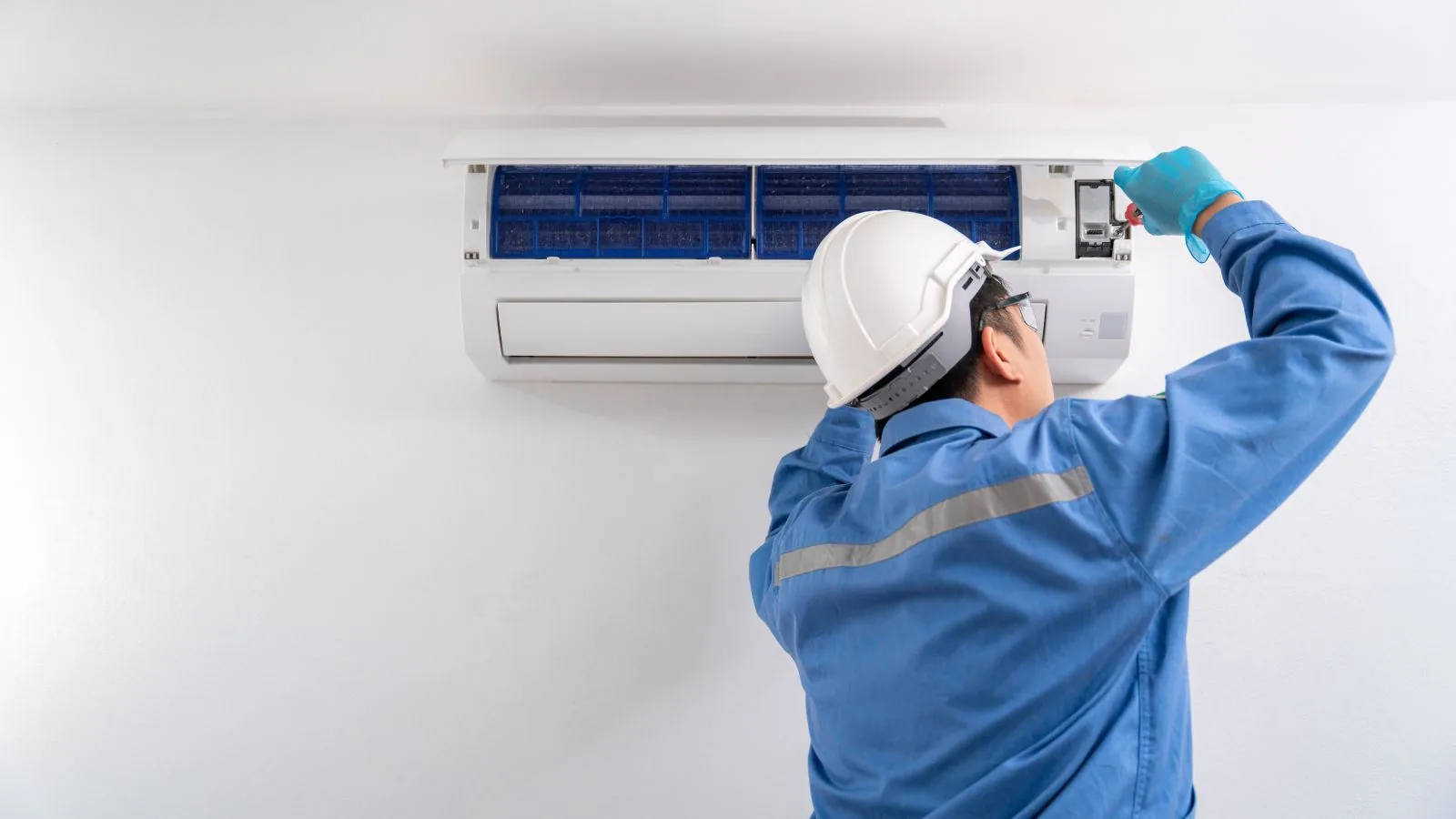
An air conditioner removes water from the air as it cools, and that water is supposed to drain away. When the drain line clogs or the pan cracks, the water goes into the building instead. If water is actively dripping, switch the system off at the thermostat and call. Our line also takes emergency calls 24/7.
How an AC unit ends up leaking into the building
Clogged condensate line
Algae and debris block the drain, and the pan overflows.
Cracked or rusted drain pan
An old metal pan corrodes and lets water through.
Frozen evaporator coil
Ice on the coil melts and exceeds the pan capacity.
Poor installation
A line without proper slope holds water instead of draining it.
Why attic and closet air handlers cause hidden damage
Many air handlers sit in attics, closets and ceiling spaces. A slow overflow soaks insulation and drywall above a finished room, and nobody sees it until a brown ring appears on the ceiling. By then the framing and insulation around the unit may have been wet for weeks.
Wet insulation does not dry well in a closed attic. It is usually removed and replaced so the cavity can dry.
What to do when your AC leaks, and what we dry and repair
- Switch off the system. Running a leaking unit adds more water to the problem.
- Check the ceiling and walls. Moisture meters and thermal imaging show how far water traveled.
- Remove what cannot dry. Soaked insulation and soft drywall are cut out.
- Dry the cavity and repair. Air movers and dehumidifiers dry framing, then drywall and paint are restored.
AC leak or other source? How to tell
| Clue | Points to | Next step |
|---|---|---|
| Drip only when the AC runs | Condensate line or pan | Switch off the unit and call an HVAC technician |
| Drip after rain only | Roof or flashing | See ceiling water damage repair |
| Drip any time, even with AC off | Plumbing leak | Close the main valve and call a plumber |
| Wet spot below an attic unit | Pan overflow | Check the secondary drain line |
What affects the cost of AC leak repair
Cost follows the area that got wet, the amount of insulation to replace, whether the ceiling drywall is soft and how accessible the cavity is. The HVAC technician repairs the unit and the drain, and we dry and restore the space. We explain the scope and price before work starts.
Routine checks that prevent AC water damage
Most AC leaks start with a drain line that was never cleared. An HVAC technician can flush the condensate line during seasonal service and test the float switch that shuts the system off when the pan fills. A secondary drain pan under an attic or closet unit gives the water somewhere to go if the main drain clogs.
Homeowners can help by changing filters on schedule, which keeps the coil from icing, and by looking at the drain outlet outside for steady dripping in summer. A line that never drips on a hot day may be blocked.
What a drying visit after an AC leak looks like
We start at the visible stain and work outward with a moisture meter. Ceiling drywall near a leaking air handler is often wet for several feet in every direction. Insulation is checked, and anything soaked is removed. Small openings are cut in the ceiling so air movers can dry the cavity from below and the attic side can be checked from above.
The goal is dry framing and a ceiling that can be patched once, not a ceiling patched over wet insulation.
Insurance note for AC leaks
Policies vary on gradual leaks versus sudden failures, and a clogged line may be treated as maintenance. Read your policy, document the damage and ask your insurer how an HVAC water loss is handled.
If the leak left a stain overhead, see ceiling water damage repair. Moisture trapped in walls is covered in wall and drywall water damage repair. Drying equipment is explained under structural drying.
The S500 standard from the IICRC is the usual reference for classifying and drying water losses of this kind, including condensate overflow.
AC leak questions
Yes. Switch it off at the thermostat until the drain line is cleared and the pan is checked. Running it adds more water.
Humid air gives the coil more water to remove. A partly blocked drain that coped in dry weather overflows when the load rises.
It can where insulation and drywall stay wet. The EPA advises drying wet materials within 24 to 48 hours.
No. An HVAC technician repairs the unit and clears the line. We dry the wet structure and restore it.