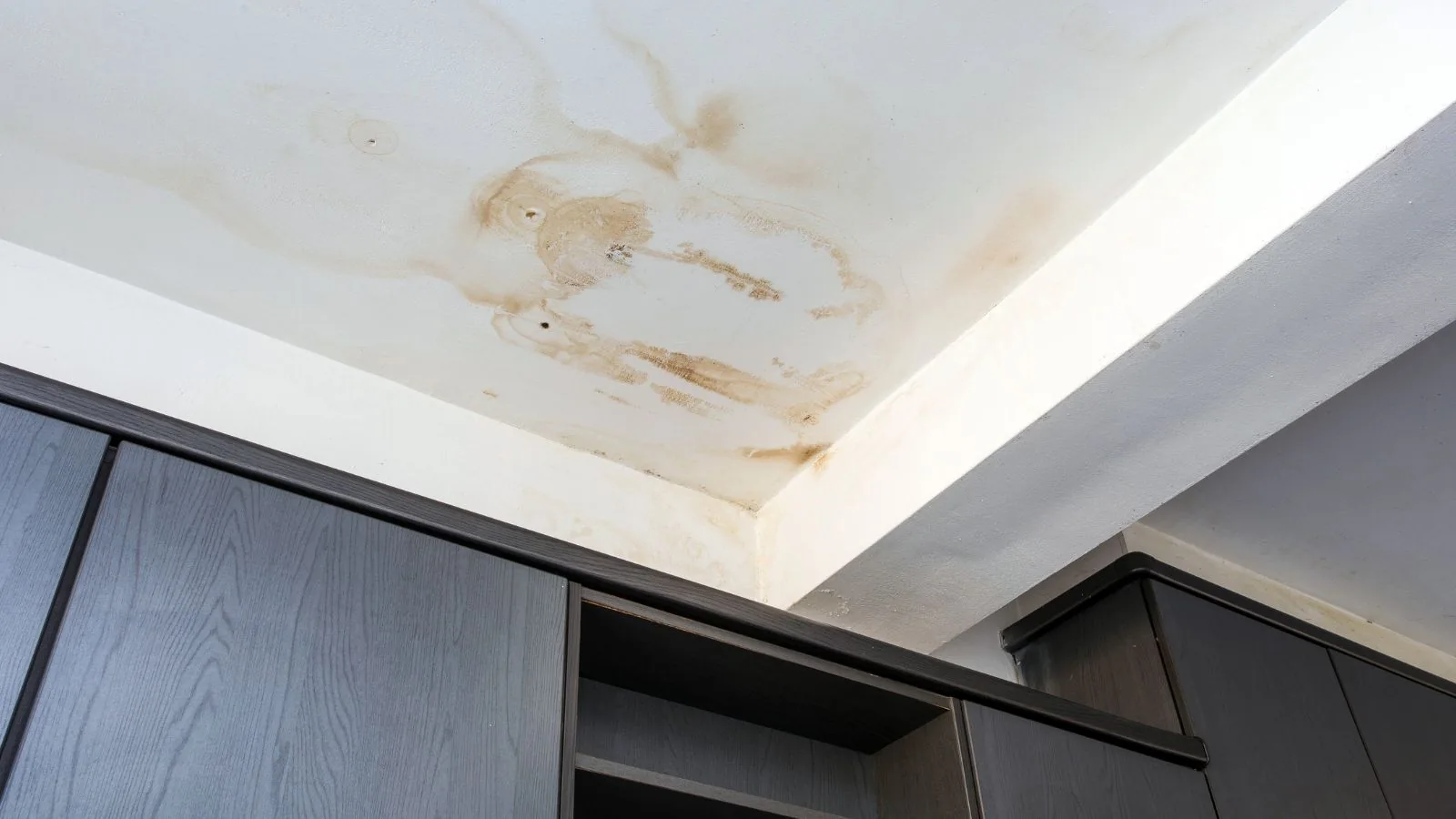
Kitchens hold the most water-using equipment in a home. A leak under a sink or behind a dishwasher can run for days before the cabinet base swells. If the water is active, close the shutoff valve and call. Our emergency line is open 24/7.
Where kitchen water damage starts
Under-sink plumbing
Supply lines, drain traps and disposal connections drip into the cabinet.
Dishwasher
Door seals, inlet valves and drain hoses leak under the unit.
Refrigerator water line
Ice maker lines leak behind the appliance and into the floor edge.
Upper-floor leaks
Water from a bathroom above stains the kitchen ceiling.
What water does to cabinets, countertops and flooring
Particleboard cabinets swell and lose strength when wet, while solid wood cabinets can often be dried. Laminate countertops separate from their base, and floors absorb water at seams. Vinyl and tile hide water beneath them, which keeps the subfloor wet.
Toe kick boards and cabinet backs are often the first parts to show moisture.
How we restore a water-damaged kitchen
- Stop and extract. We confirm the source is off and remove standing water.
- Open the wet areas. Toe kicks, base trim and sometimes drywall are removed to reach hidden moisture.
- Dry with equipment. Air movers, dehumidifiers and low-profile drying systems dry cabinets and subfloor.
- Repair or replace. Damaged boards, flooring and drywall are rebuilt once readings are normal.
Cabinet, counter and floor outcomes compared
| Material | Often | Why |
|---|---|---|
| Solid wood cabinet | Dried and kept | Wood recovers when dried promptly |
| Particleboard cabinet base | Replaced | It swells and weakens |
| Laminate countertop | Replaced if lifting | Edges separate when wet |
| Vinyl plank floor | Lifted, dried, relaid or replaced | Water sits beneath the planks |
| Tile | Kept, subfloor checked | The surface resists water |
What affects the cost of kitchen water damage restoration
Price depends on how far the water spread, the size and type of cabinets, the flooring and whether the subfloor or drywall is wet. Kitchen finishes vary widely. We explain the scope and price before work starts.
Kitchens in rentals and multi-unit buildings
In an apartment, a kitchen leak often reaches the unit below. The owner, the tenant and the neighbor may each have a different insurer. Tell the building manager right away, photograph the damage in your unit and keep written notes of every call.
Shared plumbing stacks mean the source may be in another unit. We can dry the affected kitchen and work with the manager on access to the source.
Hidden spots in a kitchen where water collects
- Behind the dishwasher where the inlet and drain connect.
- Under the sink base, where the cabinet floor can stay damp for months.
- Behind the refrigerator where the ice maker line runs.
- Under the flooring near the sink and range.
- Inside the wall next to the sink or dishwasher.
Water often comes back as a stain on the ceiling below, a swollen toe kick or a lifting floor seam. These show up after the leak has been wet for a while.
Planning a kitchen repair around the water damage
Kitchen repairs involve cabinets, countertops, flooring and plumbing, and the sequence matters. Drying comes first, then plumbing repairs, then flooring and cabinet work. If counters or cabinets must come out, we coordinate with your plumber and builder so the pieces go back in the right order.
Taking photos before anything is removed helps your insurer and your contractor understand the layout.
Insurance note for kitchen leaks
Sudden plumbing and appliance leaks are treated differently from slow seepage. Photograph the damage, keep failed parts and read your policy before you file.
If the leak began at an appliance, read appliance leak water damage. Wet flooring is covered under hardwood floor water damage repair, and moisture in walls under wall and drywall water damage repair.
Drying goals for cabinets and subfloors are guided by the IICRC S500 water damage standard. It is reasonable to ask a company whether it works to it.
Kitchen water damage questions
Solid wood cabinets often can. Particleboard cabinets usually cannot, because the material swells and weakens.
Look for soft spots, lifting edges, a musty odor or stained ceilings below. Moisture readings confirm it.
Wet, closed spaces can support mold. The EPA advises drying wet materials within 24 to 48 hours.
Yes. The line is open 24/7 for active leaks.