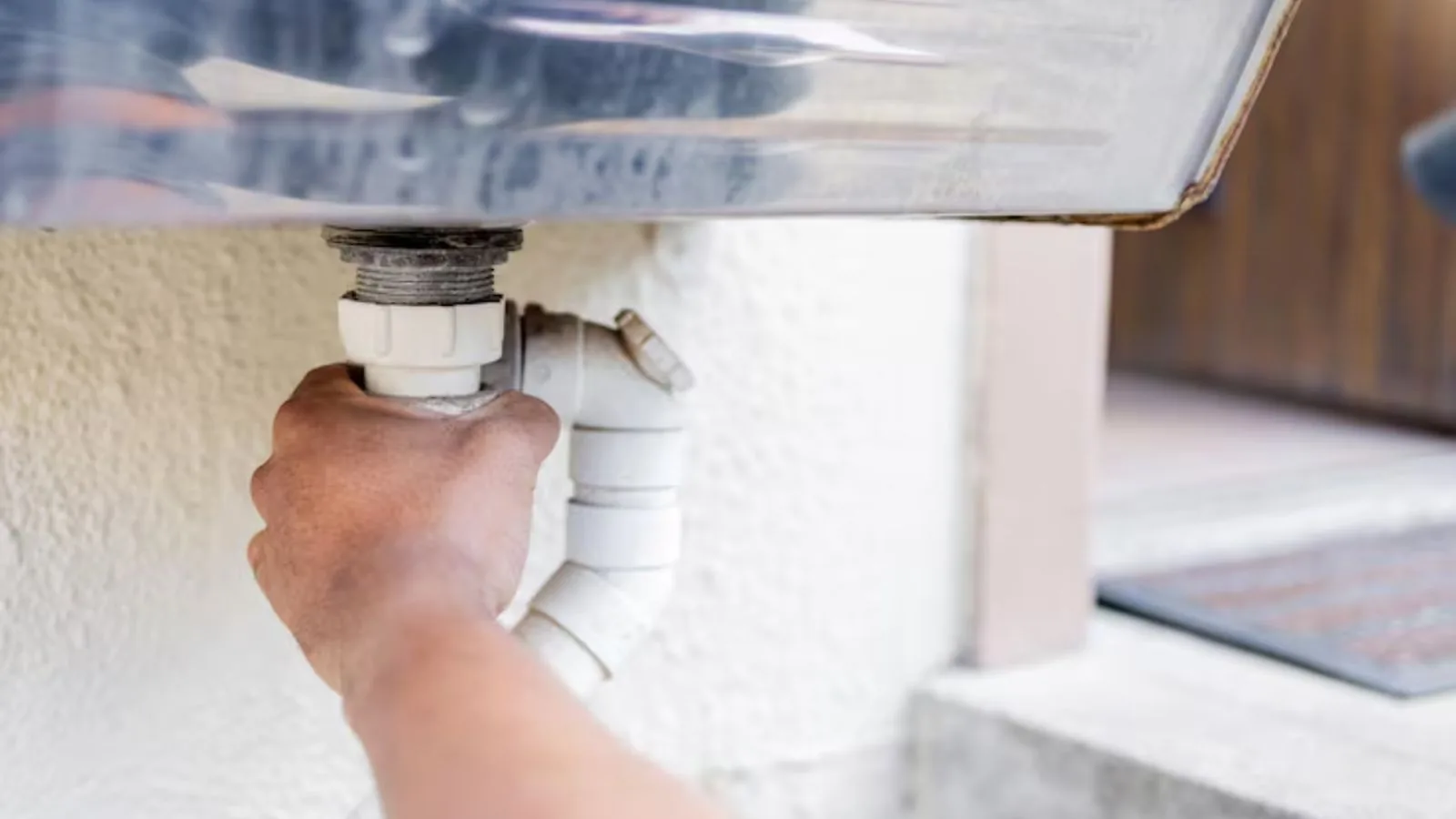
A leaking water heater is an emergency because a full tank holds enough water to flood a utility room and the rooms next to it. Our line is open 24/7. Shut off the cold water supply to the tank, switch off the power or gas to the unit, and keep out of standing water near the heater.
Why water heaters fail and what the water does
Tanks corrode from the inside, and the failure usually starts at the bottom, at a fitting or at the relief valve. Small weeping leaks may run for weeks and soak the floor and the wall behind the unit. A tank failure can release the whole contents at once.
The water is usually clean at first but can pick up dirt and sediment. If it sits on carpet or in a closet, it still needs prompt removal and drying.
Emergency shutoff for a leaking water heater
- Turn off the energy. Switch off the electric breaker or set the gas control to off.
- Close the cold supply valve. The valve is on the pipe that feeds the top of the tank.
- Drain only after the leak is controlled. A plumber can connect a hose and drain the tank safely.
- Call us for removal and drying. Hot water on floors and walls needs quick extraction. The line is open 24/7.
Where heater water ends up
Water heaters often sit in basements, closets, garages and utility rooms next to finished space. Water runs under baseboards and walls into carpet, hardwood and adjoining rooms. If the heater sits on an upper floor, water travels through the floor into the ceiling below.
| Location of heater | Where water goes | What we check |
|---|---|---|
| Basement | Floor, drain and the base of walls | Concrete moisture, stored items, wall bottoms |
| Closet or hallway | Carpet, flooring and adjoining rooms | Subfloor and baseboards |
| Upper floor or attic | Floor, then ceiling below | Ceiling cavity and insulation |
| Garage | Slab and attached walls | Drywall at the shared wall |
What affects the cost of heater leak cleanup
Price depends on the amount of water, the rooms and floors it reached, the flooring involved and whether any drywall or insulation must be removed. A plumber replaces the tank, and we dry and restore the space. We explain the scope and price before work starts.
Tank leaks versus fitting leaks
A leak at the top of the tank is often a loose or worn fitting or the relief valve. A leak from the bottom or the side of the tank usually means the tank itself has failed and the heater needs to be replaced. A plumber can tell which it is.
Knowing the difference helps with the cleanup scope. A fitting leak that ran slowly may have wetted only the floor beneath, while a tank failure can send the full volume into adjoining rooms.
Drying finished spaces near a heater
Heaters in finished closets, laundry rooms and utility areas sit against walls and flooring that can hold water. We lift baseboards, check wall bottoms with moisture meters and dry the floor assembly. Wood and drywall that stay wet become a source of odor and mold.
Insurance note for water heater leaks
Sudden tank failures are often treated differently from slow leaks that went unnoticed. Keep the old tank or photos of the failure if your insurer asks, and read your policy for how leaks are handled.
If the water reached finished space, see carpet water damage restoration and hardwood floor water damage repair. Pools of water on a basement floor are covered under water extraction. A leak that began in a supply line is on the burst pipe page.
IICRC S500 is the published water damage standard. Whether a company's crews follow it is a fair question to put to any restoration firm.
Water heater leak questions
Yes. The line is open 24/7. Shut off the supply and the power or gas to the heater, then call (732) 352-9660.
It can be. Electric units add a shock risk when water is present. Gas units should be turned off at the control. Do not enter standing water near an energized heater.
Yes. A corroded tank can fail suddenly. A small drip at the bottom is a reason to call a plumber promptly.
No. A licensed plumber replaces the heater. We remove the water and dry and restore the damaged space.