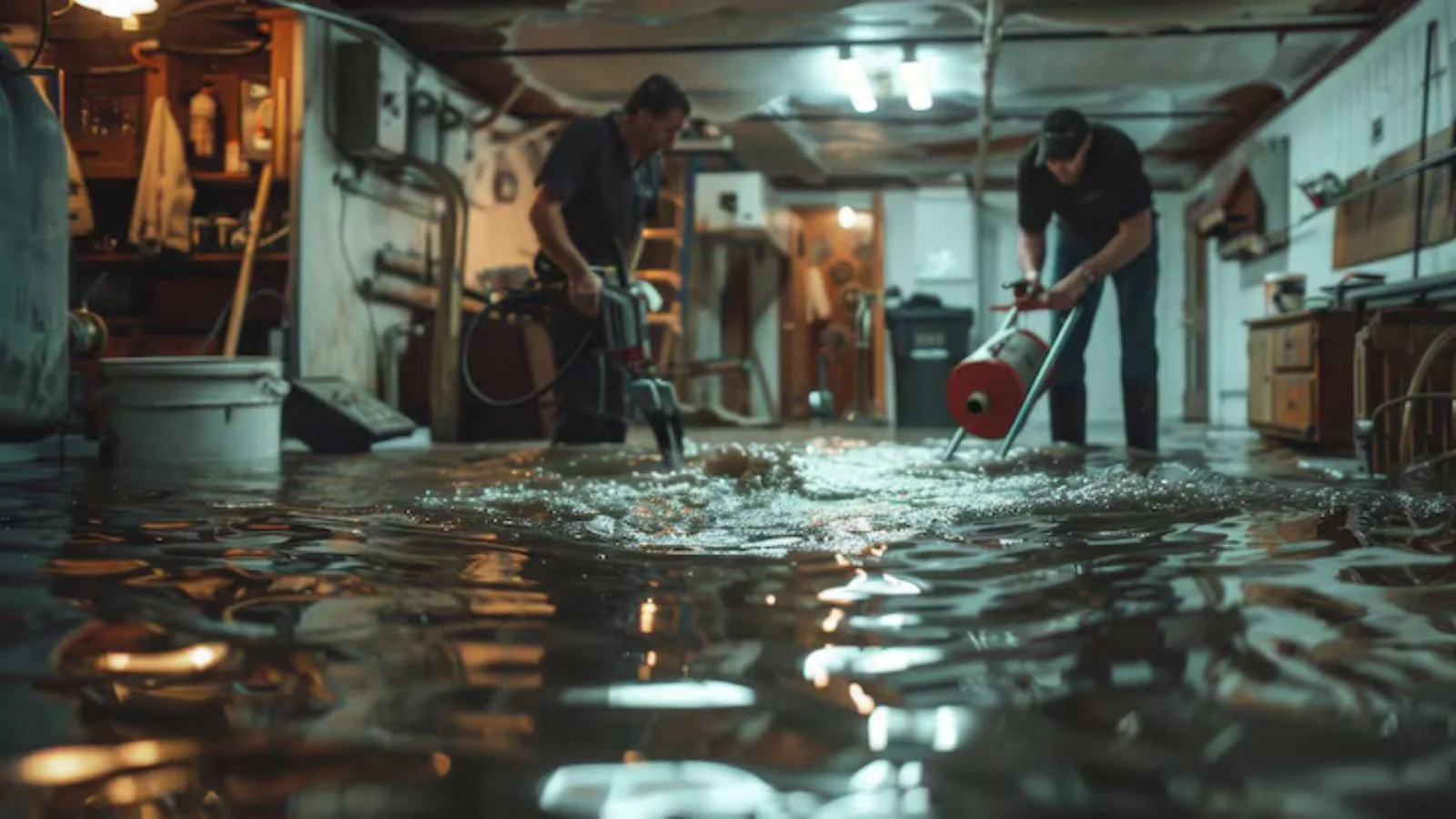
Standing water in New Brunswick is an emergency, because it soaks into drywall, subfloor and insulation within hours. Our call line is open 24/7, including nights and weekends. While you wait, stay out of water near outlets, close the source valve if it is safe, and lift small items off wet floors.
Why standing water has to come out before drying can begin
Dehumidifiers and air movers dry surfaces, but they cannot dry a room that still has water on the floor. Every inch of standing water keeps feeding moisture into baseboards, wall bottoms and carpet pad. Removing the bulk water first shortens the drying phase and reduces how much material has to be torn out.
The EPA advises drying wet materials within 24 to 48 hours to limit mold growth. Extraction is the step that makes that window realistic.
Emergency water extraction: when to call right now
- Water is deeper than an inch across a room or has reached a wall.
- A basement is filling after heavy rain or a failed sump pump.
- A pipe, water heater or appliance has released water for more than a few minutes.
- Water is dripping through a ceiling or has pooled above a light fixture.
- The water is cloudy, dark or smells like sewage, which means it should not be handled by hand.
How we remove water from a New Brunswick property
- Find the source and the depth. We confirm whether the water is clean, gray or contaminated, because that decides how it is removed and disposed of.
- Pump the bulk water. Submersible pumps clear deep water in basements and lower levels. Hoses route the water to a drain or outdoors away from the foundation.
- Extract what remains. Wet vacuums and weighted floor extractors pull water out of carpet, pad, and low spots that pumps cannot reach.
- Measure and hand off to drying. Moisture readings show what is still wet. Then structural drying begins so the structure returns to normal levels.
Extraction methods compared
| Method | Best for | Limit |
|---|---|---|
| Submersible pump | Basements and flooded lower levels | Leaves a thin film of water on the floor |
| Portable extractor | Carpet, pad and tight rooms | Slower on deep standing water |
| Weighted floor extractor | Large carpeted areas | Needs a clear floor to roll on |
| Wet vacuum | Edges, corners and hard floors | Small tank, so it is used last |
The method is chosen on site based on depth, flooring and water category.
What shapes the cost of water extraction
Price follows the work, not a flat rate. The main factors are how deep the water is, how many rooms are affected, whether the water is clean or contaminated, what flooring is involved and how long the water has been sitting. We explain the scope and price before work starts.
Extraction after heavy rain along the Raritan
New Brunswick sits on the south bank of the Raritan River. During Hurricane Ida in 2021 the river overtopped its banks, and the city reported 8 to 8.4 inches of rain. Basements and lower levels near the river and low streets took on water well away from the bank itself.
Groundwater and stormwater that enter from outside are not clean. They are removed and disposed of as contaminated water, which is a different job from a supply line leak. See flood damage cleanup for the full process.
Safety before extraction starts
Do not step into standing water if it may reach outlets, extension cords or the panel. Water and power together can be deadly. If you can reach the main breaker without standing in water, switch off power to the wet area, then call.
Water extraction and your insurance
Many policies cover sudden internal water releases but exclude flood. Read your policy and ask your insurer what applies. Photos taken before extraction and a record of moisture readings help your claim.
Water that reached a basement or crawl space often needs more than extraction. Read about basement water damage cleanup, sewage backup cleanup and burst pipe water damage to see how those jobs differ.
The published ANSI/IICRC S500 standard covers water damage restoration, including extraction and drying goals. It is fair to ask any company whether its crews work to it.
Water extraction questions
Yes. Our call line is open 24/7. Call (732) 352-9660, describe the water and where it is, and we explain the next step. If the water is near outlets, stay out of the room until power is off.
As soon as possible. Water spreads into wall bottoms, subfloor and carpet pad within hours, and the EPA advises drying wet materials within 24 to 48 hours to limit mold growth.
For a small clean spill, yes. For anything deeper than a shallow puddle, or any gray or contaminated water, call a professional. Household units are too small and spread contaminated water.
Moisture readings show what is still wet, and structural drying begins. Drywall, insulation or carpet pad that cannot be dried is removed so the structure can dry fully.
Yes. We handle shops, offices and multi-unit buildings. See commercial water damage restoration for how we work in occupied buildings.