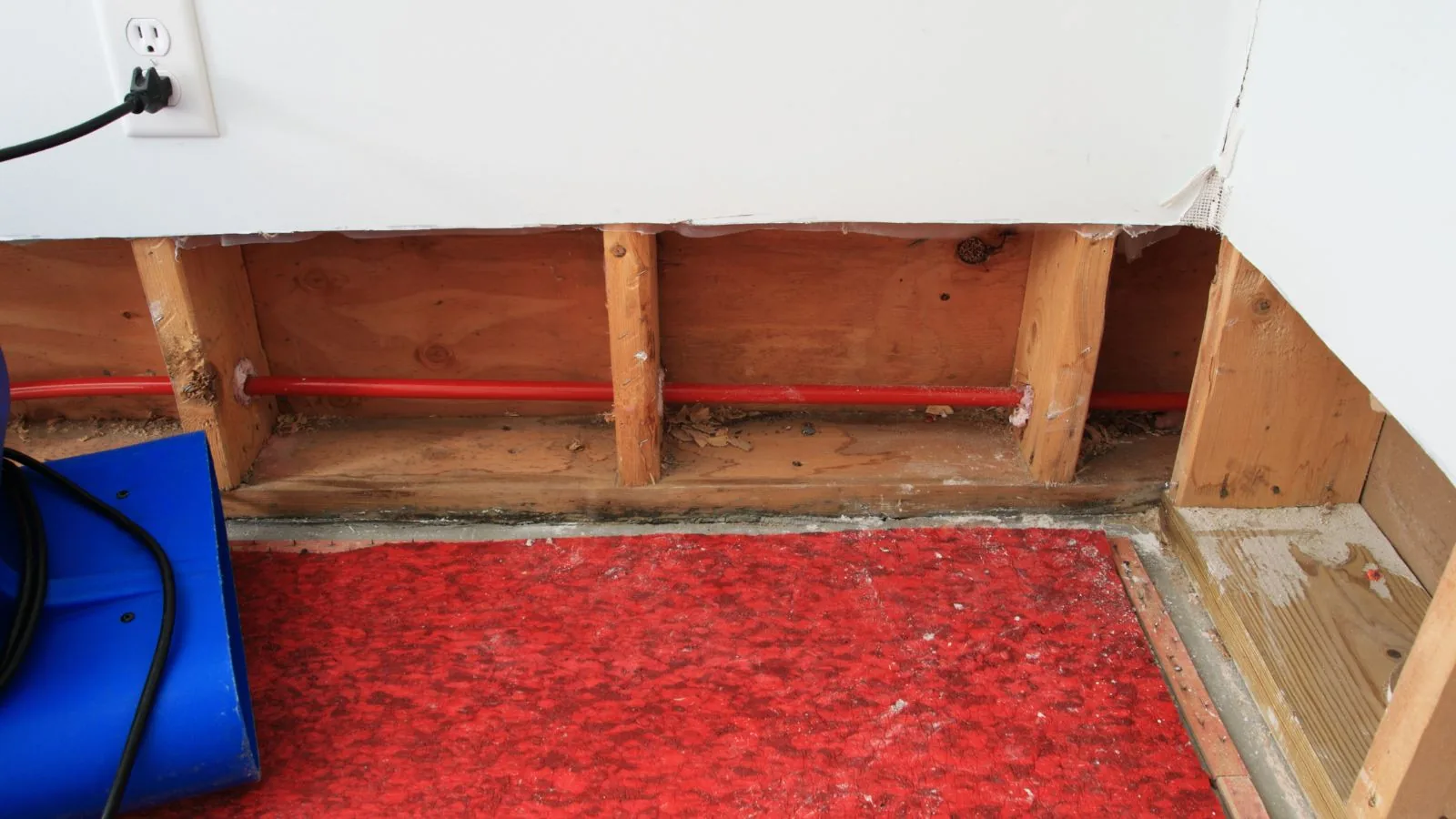
Wet carpet holds water in the fibers, the pad and the subfloor beneath. If the water came from a clean source and the carpet is only damp, quick action can save it. Our emergency line is open 24/7 for active leaks.
Carpet, pad and subfloor: three layers that dry at different rates
Carpet fibers dry fastest. The foam or rebond pad underneath holds water like a sponge, and the subfloor below dries the slowest. A carpet that feels dry on top can still sit on a wet pad.
Because pad is inexpensive to replace and hard to dry, it is often removed even when the carpet is saved.
When wet carpet can be saved and when it cannot
| Water type | Carpet outcome | Pad outcome |
|---|---|---|
| Clean, caught within a day or two | Often saved | Usually replaced |
| Clean, left several days | May be saved with cleaning | Replaced |
| Gray water (washer, dishwasher) | Case by case | Replaced |
| Floodwater or sewage | Removed | Removed |
Water categories follow the IICRC S500 standard.
What to do with wet carpet, and how we restore it
- Extract the water. Weighted extractors pull water from the carpet and pad.
- Lift and inspect. Carpet is peeled back to let the pad and subfloor be checked.
- Remove pad and dry the floor. Pad is discarded. Air movers and dehumidifiers dry the subfloor.
- Reinstall or replace. Clean, dry carpet is stretched back over new pad. Damaged sections are replaced.
What affects the cost of carpet water damage restoration
Cost depends on area size, the water category, whether the carpet is saved or replaced, and how long the subfloor needs to dry. We explain the scope and price before work starts. Carpet replacement is priced by material and area.
Carpet types and how they respond to water
| Carpet type | Response to water | Notes |
|---|---|---|
| Nylon | Resists staining and dries well | Backing can still hold moisture |
| Polyester | Dries quickly but can show wicking stains | Texture may change if wet for long |
| Wool | Absorbs water and can discolor | Needs careful cleaning |
| Berber loop pile | Snags when stretched wet | Reinstalling needs care |
Backing matters as much as fiber. Jute and older backings can shrink and rot, while synthetic backings tolerate water better. A technician checks the backing when peeling the carpet back.
Odor after wet carpet
A sour or musty smell means moisture remained after drying or the pad was left in place. Odor is a sign to check for hidden wet areas, not just to deodorize. We look for moisture under the carpet edge and along baseboards, then dry and clean the area before applying odor treatment.
Deodorizing a wet carpet without drying it only masks the problem.
Insurance note for carpet
Insurers often ask for photos of the wet carpet before it is pulled up. Keep a sample or photograph labels if you plan to replace it, and read your policy for how flooring is covered.
For the first step, see water extraction. Carpet over a slab is covered in slab leak water damage. For water in finished lower levels, read basement water damage cleanup, and for hard floors see hardwood floor water damage repair.
Carpeted rental and student housing
New Brunswick has a large rental market near Rutgers University, and carpeted units are common in older apartment buildings. A leak in one unit can wet carpet in the units below, so tenants and landlords should document the damage and report it early.
If you rent, tell your landlord right away and keep photos. Renters insurance may cover your belongings even when the building policy covers the structure.
The IICRC S500 standard is the reference for deciding whether wet carpet and pad can be dried or must be removed. Ask your company how it decides.
Carpet water damage questions
Sometimes, when the water was clean and the carpet is caught early. The pad underneath is usually replaced, and the subfloor is dried.
Pad holds water, is hard to dry and is inexpensive to replace. Leaving it wet invites odor and mold.
Mold needs moisture. The EPA advises drying wet materials within 24 to 48 hours to limit growth.
Yes. The line is open 24/7.