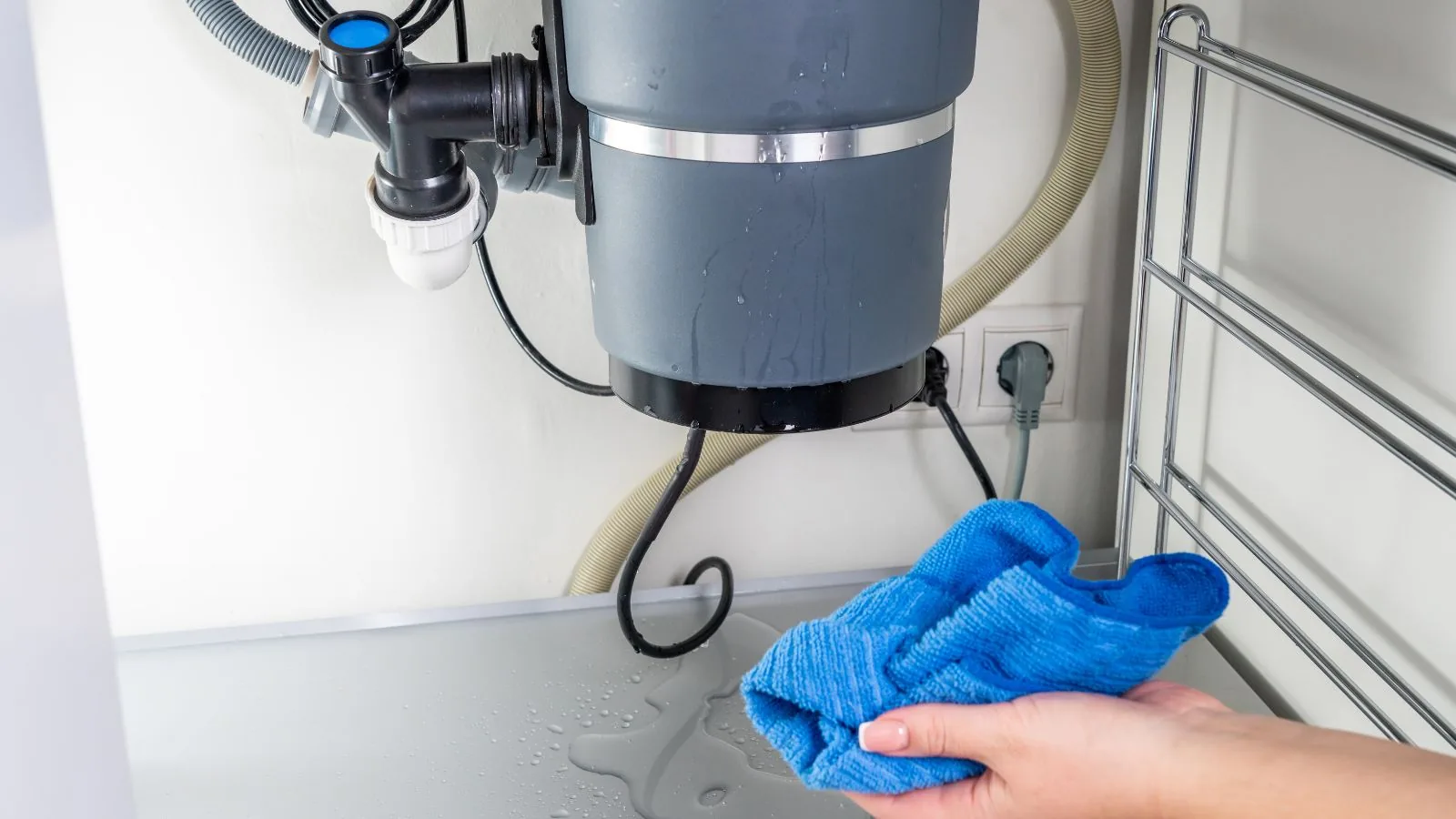
An appliance leak turns into an emergency when water reaches the subfloor or the room below. Our line is open 24/7. Unplug the appliance only if the floor is dry, close its water supply valve and keep out of water near outlets.
Which appliances cause the most water damage
Washing machines
Supply hoses can burst and drain hoses can slip, running water for as long as the machine runs.
Dishwashers
Door gaskets, inlet valves and drain lines leak into the kitchen cabinet base and subfloor.
Refrigerators
Ice maker and water dispenser lines leak slowly behind the unit.
Water softeners and filters
Fittings and brine lines drip into basements and utility closets.
Why appliance leaks do more damage than they look
Appliances sit against walls and over flooring, so leaks hide for days. Water runs under the unit, wicks into the base of cabinets and soaks the subfloor under tile, vinyl or hardwood. By the time a stain shows, a large area may already be wet.
Slow leaks are common behind refrigerators and dishwashers. A soft floor edge, a musty smell or a stained ceiling below are signs that water has been spreading for a while.
Emergency appliance leak: what to do first
- Stop the water. Close the supply valve behind or under the appliance.
- Cut power if the floor is dry. If water is near the plug, switch off the breaker instead.
- Pull the unit out if you can. Look for wet flooring behind and beneath it.
- Photograph and call. We dry what is wet. The line is open 24/7.
How hidden appliance water gets found
Moisture meters read behind baseboards and under cabinet toe kicks. Thermal imaging shows cool, wet areas on walls and ceilings. These tools show whether water traveled beyond the visible spot, which sets the scope of the drying plan.
| Appliance | Common failure | Where water travels |
|---|---|---|
| Washer | Burst supply hose | Floor, adjacent rooms, ceiling below |
| Dishwasher | Door gasket or inlet valve | Cabinet base and kitchen subfloor |
| Refrigerator | Ice maker line | Under the unit and into the floor edge |
| Water softener | Fitting or drain line | Basement floor and nearby walls |
What affects the cost of appliance leak cleanup
Cost depends on how long the leak ran, how far water spread, the flooring and cabinets involved and whether drywall or subfloor must be removed. A tradesperson repairs or replaces the appliance. We explain the scope and price before work starts.
Warning signs that an appliance is about to leak
- Rubber supply hoses that bulge, crack or show rust at the fitting.
- A washer that vibrates and walks away from the wall, stressing the hoses.
- A dishwasher door that drips at the bottom edge during a cycle.
- Water on the floor near the refrigerator after the ice maker runs.
- A musty smell from the cabinet next to a dishwasher or washer.
Replacing old rubber hoses with braided steel lines and checking the connections once a year reduces the chance of a sudden failure. Know where the shutoff valve is and make sure it turns.
Why we check the room below and the walls beside the appliance
Water from a washer on an upper floor reaches the ceiling below, and water from a dishwasher can run into the wall behind the cabinet. We scan all of these with a moisture meter and thermal camera before deciding what to open. Skipping this step is how water stays behind and turns into a second problem weeks later.
Insurance note for appliance leaks
Policies often treat sudden appliance failures differently from long-term seepage. Keep the failed hose or part, photograph the damage and read your policy before you file.
Kitchen-specific damage is covered under kitchen water damage restoration. Water that soaked the subfloor is handled with structural drying. For a leaking tank, see water heater leak cleanup.
Gray water from washers and dishwashers is a Category 2 loss under the IICRC S500 standard. That category affects what can be dried and what is removed.
Appliance leak questions
Yes. The line is open 24/7. Close the supply valve, then call (732) 352-9660.
Signs include a soft or lifting floor edge, a musty smell, cabinet bases that swell and stains on a ceiling below. Moisture readings confirm it.
Yes. Your insurer may ask to see it, and it helps explain the cause.
No. An appliance technician or plumber repairs it. We handle water removal, drying and restoration.