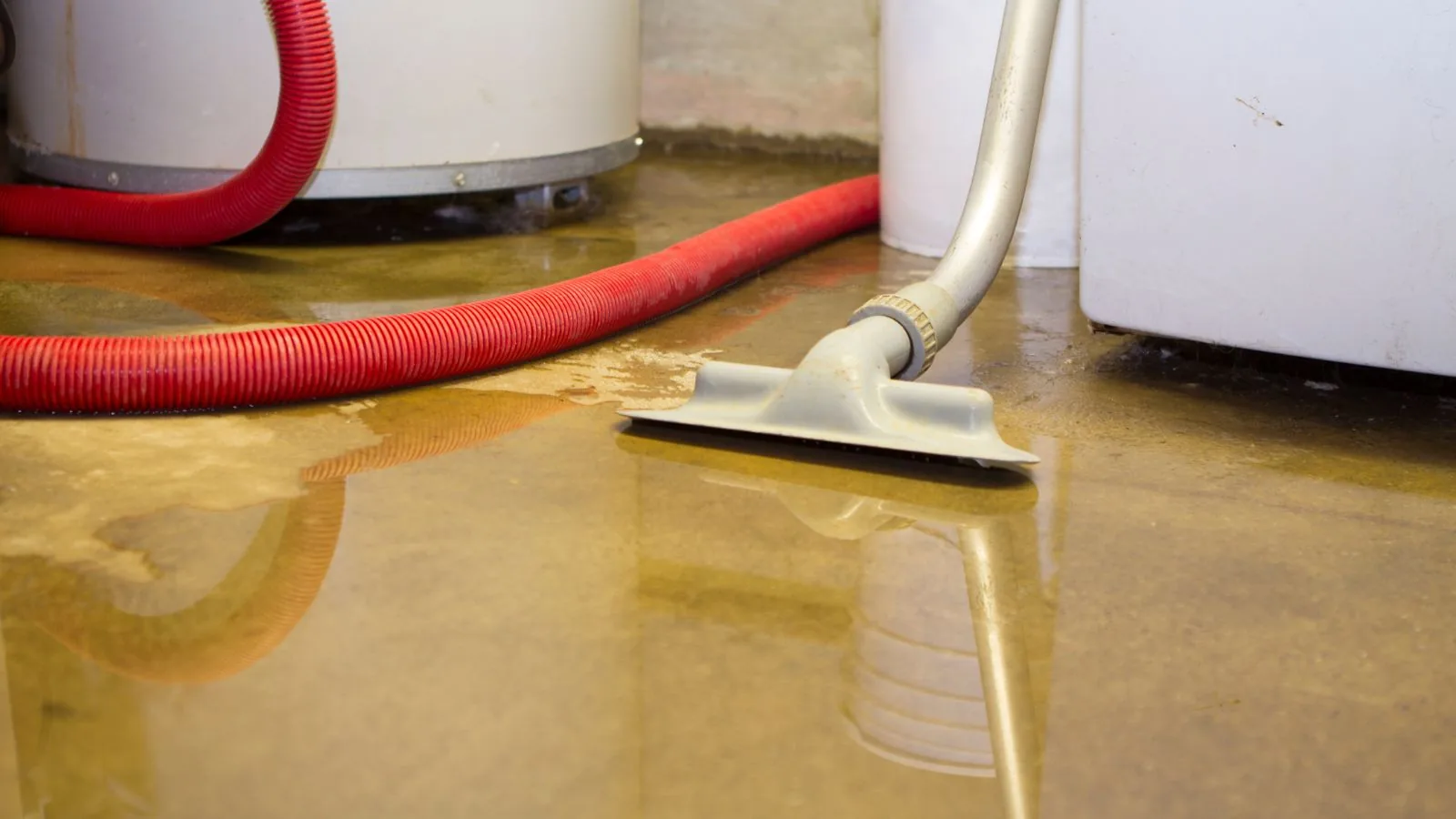
Warm floor spots, a high water bill and running water sounds: signs of a slab leak
A pipe leaking in or under a concrete slab rarely announces itself with a flood. People notice a warm patch on the floor, a water bill that jumped, the sound of water when everything is off, damp carpet along one wall or a floor that suddenly feels soft.
- A spot on the floor that is warm to bare feet, which can point to a hot water line.
- A water meter that moves when every fixture is closed.
- Damp baseboards or carpet with no visible source.
- A musty smell in a room built on a slab.
- Cracks or lifting in tile or flooring.
If you see more than one of these, close the main valve and call. A leak detection specialist or plumber finds the exact point, and we handle the water damage.
What a slab leak is and why it damages the floors above
A slab leak is a leak in a pipe that runs under or inside a concrete floor. Water pushes up through cracks and joints, soaks flooring, saturates drywall at its base and wicks into the soil below. Hot water leaks can warm the slab surface.
Concrete itself does not rot, but everything resting on it does. Carpet, pad, wood, laminate and the bottom of drywall all absorb water from below.
Slab leak emergency: what to do right now
- Close the main water valve. If water still flows, the leak is still feeding the damage.
- Keep power safe. Stay off wet floors near outlets and appliances.
- Lift items off the floor. Move rugs, boxes and furniture feet to dry spots.
- Call us and a plumber. The plumber finds and fixes the pipe. We dry the structure. The line is open 24/7.
How we dry a floor with water coming from below
We remove wet flooring, pad and the lower section of affected drywall, then use dehumidifiers and air movers to dry the exposed slab and framing. Water that has soaked into concrete takes time to release, so drying continues until readings fall to normal.
| Material above the slab | Usual result | Why |
|---|---|---|
| Carpet and pad | Removed | Absorbs water from below and holds it |
| Floating floor | Lifted and dried or replaced | Water sits beneath the planks |
| Tile | Often kept, grout checked | Tile resists water, subsurface may not |
| Baseboards and drywall base | Cut and replaced if wet | Wicking raises moisture inside the wall |
What affects the cost of slab leak water damage
Cost depends on how long the leak ran, the floor area affected, the flooring type and whether drywall must be removed. Slab pipe repair or rerouting is a plumbing job, which is separate from restoration. We explain the scope and price before work starts.
How slab leaks are found and what to expect
Plumbers use acoustic listening, pressure tests and thermal imaging to locate leaks under concrete. Repair options include breaking the slab and replacing the section, rerouting the line through the walls or ceiling, or relining the pipe. Each affects the floor above differently.
Tell the plumber that restoration will follow so the work can be planned around drying. We coordinate with them to remove wet flooring before the slab is opened.
Why drying a slab takes patience
Concrete is porous and releases water slowly. Rushing flooring back onto a damp slab traps moisture and causes new problems. We measure moisture at the surface and at depth, and drying equipment runs until the slab meets the readings needed for the new floor.
Insurance note for slab leaks
Coverage for slab leaks varies by policy. Some policies cover the resulting water damage but not the cost of finding or repairing the pipe. Read your policy and talk with your insurer before repairs begin.
After the leak is fixed, drying is covered under structural drying. Wet flooring is handled under carpet water damage restoration and hardwood floor water damage repair. For other plumbing failures, see burst pipe water damage.
ANSI/IICRC S500 is the published reference for water damage restoration. It also covers how materials that sit on or against concrete are dried and checked.
Slab leak questions
Yes. The line is open 24/7. Close the main valve, then call (732) 352-9660.
A warm spot can mean a hot water pipe is leaking under the slab, and a higher bill means water is being used somewhere unseen. Close the main valve and have a plumber test the lines.
No. A plumber or leak detection specialist locates and repairs the pipe. We remove the water and dry the structure.
Wet carpet, pad and drywall can support mold if they stay wet. The EPA advises drying within 24 to 48 hours.