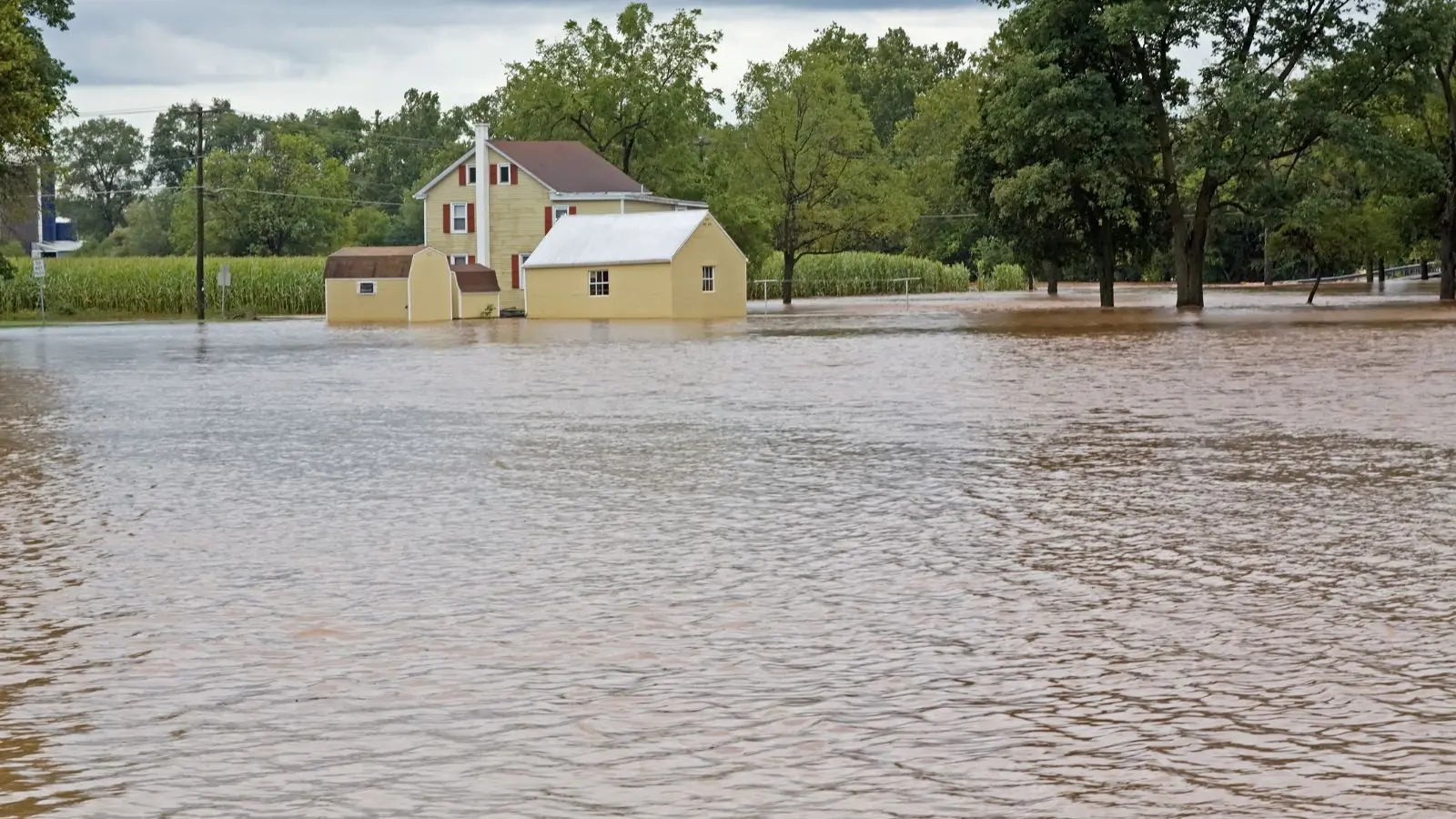
Storm water entry is an emergency, because wet insulation and drywall stay wet. Our line is open 24/7. Stay clear of flooded areas and downed lines, place buckets under active drips, and photograph the damage before moving anything.
How storm water gets into New Brunswick buildings
Roof and flashing
Wind lifts shingles and rain enters at chimneys, vents and skylights.
Windows and doors
Wind-driven rain pushes past worn seals and caulk.
Gutters and grading
Overflowing gutters and downspouts discharge at the foundation.
Low basements and window wells
Runoff collects and enters through cracks and window wells.
Hurricane Ida in 2021 showed how intense rain can overwhelm drainage in this part of New Jersey. Smaller storms can still push water into older roofs, window frames and basement walls.
Storm damage emergency: first steps
- Check for safety hazards. Stay away from downed power lines, flooded electrical panels and sagging ceilings.
- Contain the water. Use buckets and towels. Move furniture off wet floors.
- Cover openings if safe. A tarp on a roof is a job for a roofer. Do not climb a wet roof.
- Call us and your insurer. Photograph first, then call. We start extraction and drying.
Rain water versus floodwater: why the source matters
Rain that enters through the roof or a window is usually cleaner than floodwater, though it can pick up dirt and insulation fibers. Water that rises from the ground or comes through drains is contaminated and is handled the way flood and sewage jobs are.
| Entry point | Likely water type | Typical handling |
|---|---|---|
| Roof leak | Rain, lightly dirty | Dry in place, replace wet insulation |
| Window or door seal | Rain | Dry the wall and trim |
| Basement wall seepage | Groundwater | Treat with caution, remove porous items |
| Rising water or drain backup | Contaminated | Follow flood and sewage procedures |
What affects the cost of storm damage cleanup
Cost depends on how many areas are wet, the type of water, the materials involved and how much needs removal. Roof repair, window sealing and drainage fixes are separate trades. We explain the scope and price before work starts.
What to do when a storm leaves you without power
Storms often knock out power along with causing leaks. A sump pump stops without electricity, so a basement can flood during an outage. Move valuables off the floor before the storm if you can, and never run a generator indoors or in a garage.
Once power returns, have an electrician check any circuit that got wet before you switch it on. Wet outlets and panels are a shock and fire risk.
Roof, siding and window checks after a storm
After a severe storm, walk the exterior with a flashlight if it is safe. Look for lifted shingles, damaged flashing, cracked siding and gaps around windows. Photograph anything you find, since insurers want documentation of the cause.
Inside, check the ceiling, the attic and the corners of rooms along exterior walls for stains or dripping. Small stains tell you where to start, and a moisture meter shows how far they go.
Drainage and gutters: the cheap fix that prevents the next storm loss
Clean gutters, extended downspouts and grading that slopes away from the foundation carry water away from the building. Window wells should drain freely and have covers. Fixing these before the next storm costs far less than the cleanup after it.
We handle the inside of the building. For exterior grading and drainage work, hire a qualified landscape or drainage contractor.
Insurance note for storm damage
Policies differ on wind-driven rain, roof damage and flood. The New Jersey Department of Banking and Insurance notes that flood needs separate coverage. Check your policy and document the damage before cleanup.
For overhead stains, see ceiling water damage repair. Rising water is covered in flood damage cleanup, and seepage in basement water damage cleanup. Wet framing is dried through structural drying.
The IICRC S500 standard separates rain that enters through a roof from floodwater that rises from the ground. The category decides how materials are handled.
Storm water damage questions
Yes. The line is open 24/7. Stay clear of flooded areas and call (732) 352-9660.
No. A roofer repairs the roof. We remove water and dry the inside of the building.
It depends on the policy. Many policies cover wind damage to the roof and the resulting interior water, but flood is excluded. Ask your insurer.
Quickly. Wet insulation holds water against drywall and framing. The EPA advises drying wet materials within 24 to 48 hours.