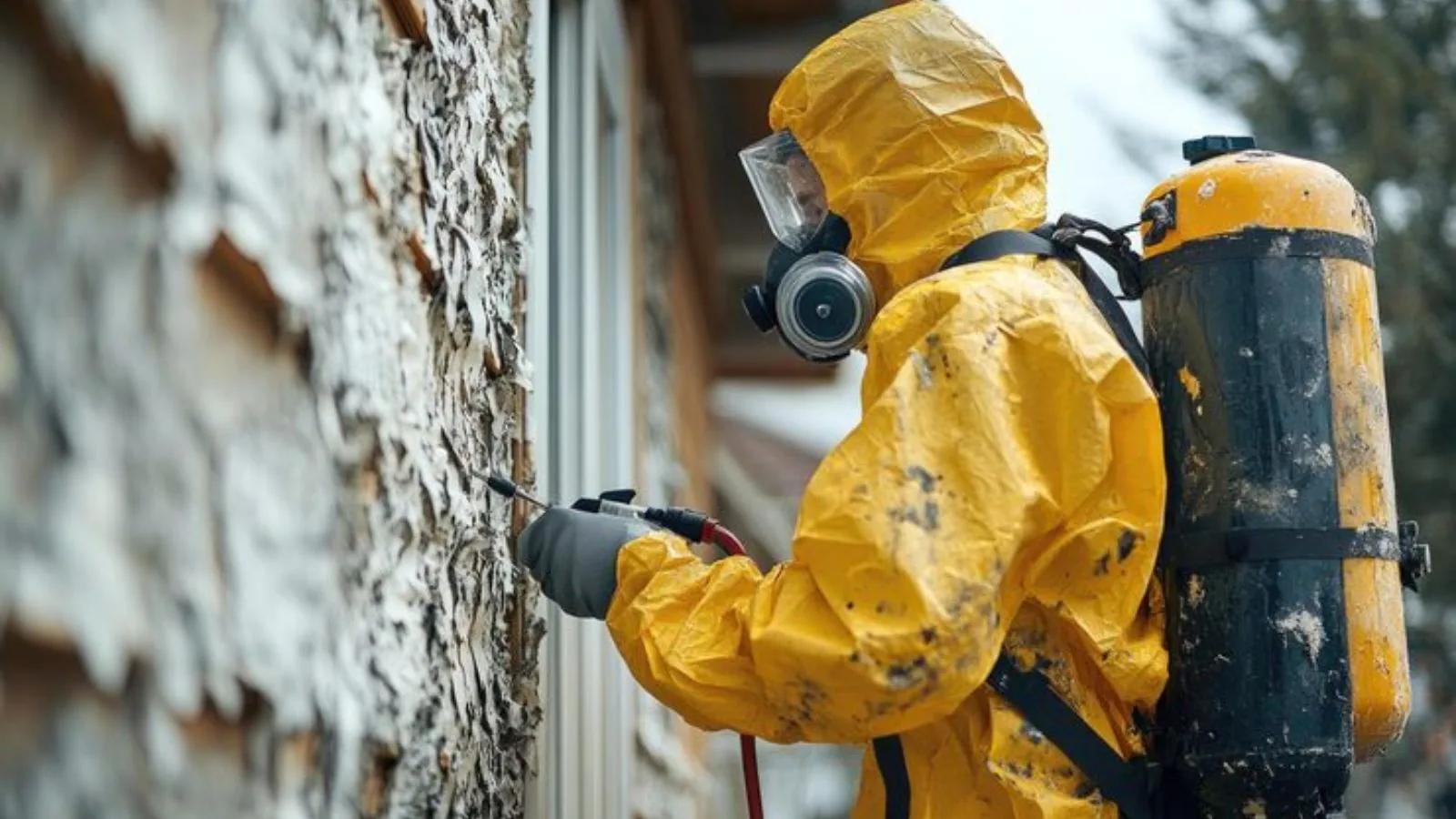
Musty smell, dark spots and bubbling paint: signs of mold after water damage
Mold announces itself in a few ways. A musty or earthy smell that returns after cleaning, dark or fuzzy patches on walls and ceilings, paint that bubbles or peels and spots on the back of a closet wall are the usual signs. They often show up weeks after a leak that nobody noticed.
- A musty smell in a bathroom, basement, closet or attic.
- Black, green, white or gray patches on drywall, wood or grout.
- Peeling paint or wallpaper near a past leak.
- Visible condensation on windows or cold walls.
- Mold under a sink, behind a toilet or along a window sill.
If you see these signs after water damage, call. If the water is still active, the line is open 24/7 for emergencies, and the water comes first.
What mold needs to grow, and why water damage sets it off
Mold needs moisture, a food source and time. Drywall paper, wood, insulation and carpet are all food. Moisture is the part that can be controlled. The EPA says mold cannot grow without it, and advises drying wet materials within 24 to 48 hours.
That is why the best mold control is fast water removal and drying. See structural drying for how drying is measured.
Can you clean mold yourself? What the EPA says about small areas
The EPA says mold covering about 10 square feet or less, roughly a 3 foot by 3 foot patch, can usually be handled by the homeowner on non-porous surfaces. Wear gloves, eye protection and a mask rated for the job. Do not mix bleach with other cleaners. Fix the water source first, or the mold returns.
Porous materials such as ceiling tile, carpet and soaked drywall are normally removed, not scrubbed. Mold can grow into them, and surface cleaning does not reach it.
When to call a mold remediation company
- The affected area is larger than about 10 square feet.
- Mold returns after you clean it.
- The growth is inside walls, under flooring or in an HVAC system.
- Contaminated floodwater or sewage caused the moisture.
- You are preparing a home for sale or a lender requires clearance.
How mold remediation works: containment, removal and drying
- Find and stop the moisture. Remediation fails if water is still reaching the area. A plumber or roofer fixes the source.
- Contain the work area. Plastic barriers, negative air machines and HEPA air filtration keep spores from spreading to clean rooms.
- Remove contaminated materials. Moldy drywall, insulation, carpet and other porous items are bagged and removed. Solid surfaces are cleaned with HEPA vacuums and damp wiping.
- Dry the structure. Dehumidifiers and air movers dry remaining materials until readings are normal.
- Verify and rebuild. The area is checked, and repairs begin after it passes.
Practices in the industry follow the IICRC S520 standard for professional mold remediation. Naming the standard does not mean every job is identical. Each plan depends on the size of the area and the materials.
Mold testing, inspection and clearance: what each means
Inspection is a visual and moisture check by a qualified assessor to find where growth is and why it is there. Testing may include air or surface samples that a laboratory analyzes. Clearance, or post-remediation verification, is a check after remediation to confirm the area is clean and dry.
For clearance, many people hire an independent assessor who did not do the remediation work. That keeps the person judging the result separate from the person doing the work. Lenders, buyers and insurers sometimes ask for this paperwork.
| Step | What it answers | Who does it |
|---|---|---|
| Visual inspection and moisture readings | Where is the growth and what is wet? | Assessor or remediation company |
| Air or surface sampling | What kinds and amounts are present? | Assessor, with lab analysis |
| Remediation | Remove growth and affected materials | Remediation company |
| Clearance check | Is the area clean and dry? | Independent assessor |
Sampling is optional in many cases. A visual finding plus moisture readings may be enough.
Mold remediation, mold removal and mold cleaning compared
People use these terms loosely. Cleaning handles small surface growth on hard surfaces. Removal takes out materials that mold has grown into. Remediation is the full process, which includes containment, removal, drying and verification, and the correction of the moisture problem.
Where mold shows up in New Brunswick homes
Bathrooms
Showers, grout, caulk and exhaust fan ceilings stay damp. See shower leaks and tile failures.
Basements and crawl spaces
Seepage, high humidity and poor airflow keep surfaces damp.
Attics and top floors
Roof leaks and poor ventilation leave insulation and decking wet.
Closets and exterior walls
Cold corners collect condensation and hold stored items against damp walls.
What affects the cost of mold remediation
Cost depends on the size of the affected area, how many materials need removal, how hard the area is to reach, how much containment is required and whether testing and clearance are included. We explain the scope and price before work starts. Moisture repairs by a plumber or roofer are separate.
Mold and your insurance policy
The New Jersey Department of Banking and Insurance advises policyholders to check their policy for mold coverage. Some policies cover mold that results from a covered water loss, and many limit or exclude it. Read your policy, ask your insurer and keep records of the water source.
Mold, home sales and loans
Buyers, lenders and inspectors may ask about past water damage and mold. Keep invoices, moisture readings, photos and any clearance report. If mold is found during a sale, remediation and a clearance check are common steps. Ask your agent or attorney what disclosure rules apply to you.
Mold and damp conditions in New Brunswick buildings
The Livingston Avenue Historic District, listed on the National Register of Historic Places in 1996, is one example of New Brunswick's older building stock. Older masonry and wood buildings often have limited insulation and ventilation, which can leave cold surfaces and corners damp.
After the Raritan overtopped its banks during Hurricane Ida in 2021, wet basements and first floors were at risk from slow drying. Drying quickly matters more than any product used afterward.
The most common sources of mold are listed in these pages: basement water damage, ceiling leaks, wet walls and crawl spaces.
Mold remediation questions
Mold often has a musty smell, appears fuzzy or spotty and grows near moisture. A moisture reading and a visual inspection help tell the difference.
Not always. If growth is visible, testing may add little. Testing is useful when the source is unclear or documentation is required.
An assessor inspects the area, takes moisture readings and may sample the air or surfaces. The goal is to confirm the area is clean and dry.
Sometimes. Buyers, lenders and inspectors may ask for it. Ask your agent, lender or attorney what is needed.
It can, if moisture returns. Removal deals with existing growth. Fixing the water source and keeping the area dry is what limits regrowth.
The EPA says small areas of about 10 square feet or less can usually be handled by the homeowner on hard surfaces. Larger areas and porous materials need professional help.
Yes. For active water, our line is open 24/7.