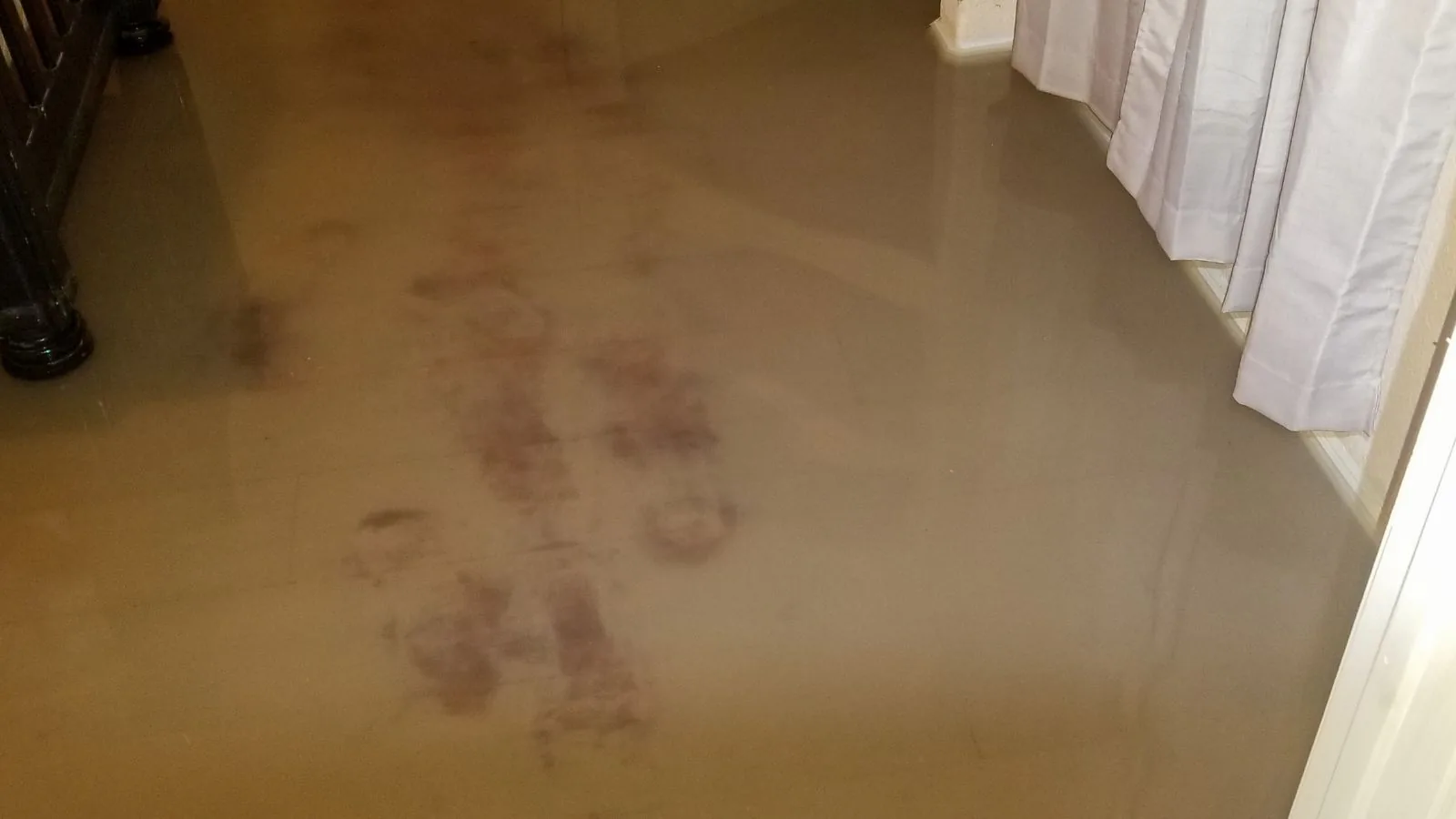
Gurgling drains, sewage smell and dirty water in a floor drain: signs of a sewer backup
A sewer backup often starts with warning signs. Drains gurgle, toilets bubble when a washer drains, a sewage smell comes from the basement or dirty water rises in the lowest floor drain. When several fixtures drain slowly at once, the main line may be blocked.
- Gurgling sounds from drains or toilets.
- More than one fixture draining slowly.
- Dark water rising in a basement floor drain, shower or tub.
- A sewage odor that does not go away.
- Water backing up in a lower-level toilet when upstairs fixtures are used.
Stop using water, including toilets, washers and showers, and call. More water in the system makes the backup worse.
Sewage emergency: what to do right now
- Stop using water. Do not flush, run the washer or use showers.
- Keep people and pets out. Sewage water can carry bacteria and should not be handled by hand.
- Do not run fans to spread it. Leave the area as it is and ventilate from clean areas only.
- Call a plumber and us. The plumber clears the line. We remove and sanitize. The line is open 24/7.
Why sewage water is handled differently from other water
Water from a backed-up sewer is classed as Category 3, the most contaminated category in the IICRC S500 standard. Porous materials that it touched, such as carpet, pad, insulation and drywall, are normally removed instead of dried. Hard surfaces are cleaned and sanitized.
Technicians wear protective gear. Do not clean this yourself, especially if children, older adults or anyone with a weakened immune system lives in the home.
Common causes of sewer and drain backups
Main line blockage
Roots, grease, wipes and collapsed pipe stop flow to the street.
Heavy rain
Heavy rain can overload sewer lines in some areas and push water back toward low drains.
Failed sump or ejector pump
Basement bathrooms and laundries that pump upward back up when a pump fails.
Plumbing vent or drain faults
A slow drain in one room can point to a branch line problem.
| Material | After a sewage backup | Reason |
|---|---|---|
| Carpet and pad | Removed | Cannot be sanitized reliably |
| Drywall touched by water | Cut out | Wicks contamination upward |
| Concrete floor | Cleaned and sanitized | Non-porous surface can be treated |
| Wood trim | Case by case | Sealed wood may be cleaned, raw wood may not |
| Stored boxes and clothes | Often discarded | Porous items hold contamination |
What affects the cost of sewage backup cleanup
Price depends on how much area was affected, how deep the water was, how much material is removed, and what must be sanitized. We explain the scope and price before work starts. Clearing or repairing the sewer line is plumbing work and is separate.
Cleaning and sanitizing after contaminated water is removed
After porous materials are out, surfaces are cleaned with detergent and treated with an antimicrobial product that suits the material. Concrete, sealed wood and tile are treated differently. Drains and floor drains are cleaned, and the room is dried before rebuilding begins.
Odor control comes after cleaning, not before. Air scrubbers with HEPA filters can help clear airborne particles.
Preventing the next backup
- Do not flush wipes, grease or paper towels.
- Have the main sewer line inspected if backups repeat.
- Ask a plumber about a backwater valve on the main line.
- Keep floor drains clear and test sump or ejector pumps.
- Know where your cleanout is.
Insurance note for sewage backups
Sewer and drain backup is often excluded from standard policies and may need an added endorsement. Read your policy and ask your insurer before cleanup begins. Photograph the damage first.
Water reaching the home from outside is described in flood damage cleanup. After cleanup, drying is covered in structural drying, and basements in basement water damage cleanup.
Sewage backup questions
The main sewer line or a branch may be blocked, or heavy rain may have overloaded the system. Stop using water, keep out of the area and call a plumber and us.
Yes. The line is open 24/7. Call (732) 352-9660 and stay out of the affected area.
It is not recommended. The water is contaminated and porous materials need removal. Professional cleanup includes protective gear and sanitizing.
Often not by default. Many policies need an added endorsement. Check your policy.