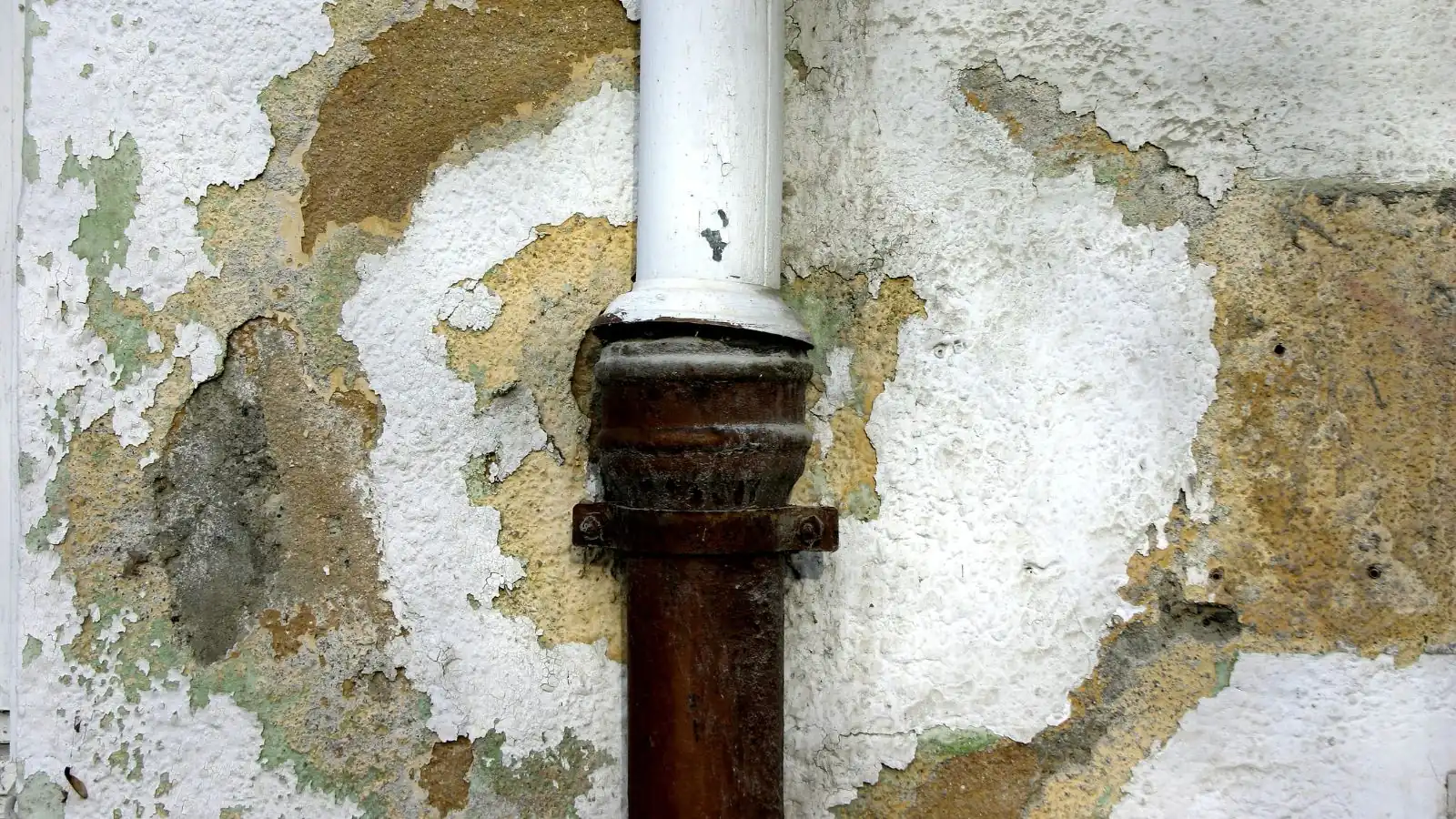
Water goes into a wall and stays there. A bubbled stain on paint can sit over a wall cavity that is soaked, which is why drywall repair starts with measurement. Call our line for active leaks, which is open 24/7.
Signs that a wall has water damage
- Brown or yellow stains that grow or return.
- Paint or wallpaper that bubbles, peels or cracks.
- Drywall that feels soft, swollen or crumbly.
- A musty smell near a wall with no visible leak.
- Baseboards that swell or pull away from the wall.
How water travels through a wall
Water follows studs, pipes and wires. It runs down inside the cavity, collects on the bottom plate and soaks insulation. Gypsum board wicks water upward, so the damp line on a wall is often higher than the water's original level.
In an older house with plaster and lath, water can stain the surface long after the leak ends, because the plaster stays damp deep inside.
When drywall can dry and when it must be replaced
| Condition | Likely action | Reason |
|---|---|---|
| Damp but firm, caught early | Dry in place | Gypsum can recover from brief wetting |
| Soft, swollen or crumbling | Cut out and replace | The board has lost strength |
| Wet for several days | Cut out, check insulation | Higher chance of hidden growth |
| Contaminated water | Cut out | Porous material cannot be sanitized |
What to do about a wet wall, and how we repair it
- Find the wet area. Moisture meters and thermal imaging show where the water is.
- Open and remove. Wet drywall is cut with a clean margin, and insulation is removed if wet.
- Dry the cavity. Air movers and dehumidifiers dry studs and plates before the wall is closed.
- Patch and finish. New board is installed, taped, sanded, primed and painted to match.
What affects the cost of wall and drywall repair
Cost depends on how much wall is wet, whether insulation is involved, the wall finish and whether paint or wallpaper must match. We explain the scope and price before work starts.
Wallpaper, paint and what hides behind a stain
Wallpaper traps moisture against the wall and hides a leak for a long time. If it lifts at the seams or shows a stain, peel a small section to see what is behind it. Vinyl or foil-backed coverings can hold water in the drywall like a seal.
Fresh paint over a stain is a warning sign when buying or renting. Press the wall gently and use a moisture meter if you can, since a repaint does not mean the wall is dry.
Plaster walls versus drywall
Drywall is a gypsum core wrapped in paper. It softens when wet and is often replaced. Plaster over lath, found in many older buildings, is denser and can sometimes be dried and repaired, though the surface may crack, stain or separate from the lath.
Plaster repair is skilled work and is priced differently than a drywall patch. We assess which material you have before suggesting a plan.
Insulation, paint and finish work after the wall is dry
Wet insulation inside the cavity is removed and replaced after the wall dries. Once the board is patched, taped and sanded, a stain-blocking primer seals any remaining marks before paint. Matching the existing sheen and color helps the repair disappear.
Insurance note for wall damage
Insurers often want to know what caused the stain and how long it has been present. Photograph the wall, note when you first saw it and read your policy about gradual leaks versus sudden releases.
Overhead sources are covered in ceiling water damage repair, and pipe breaks in burst pipe water damage. Drying methods are explained in structural drying. If you see mold, read mold remediation.
The IICRC S500 standard guides when wet drywall can be dried in place and when it must be removed. Moisture readings in the wall cavity inform that decision.
Wall and drywall questions
Only if the wall is fully dry and the leak is fixed. Painting over a wet wall traps moisture, and the stain returns.
A musty smell and a wall that stays damp are warning signs. Mold needs moisture. If you see growth, see our mold remediation page.
Painting is part of the repair, and we match the existing color as closely as possible.
Yes. The line is open 24/7 for active water.