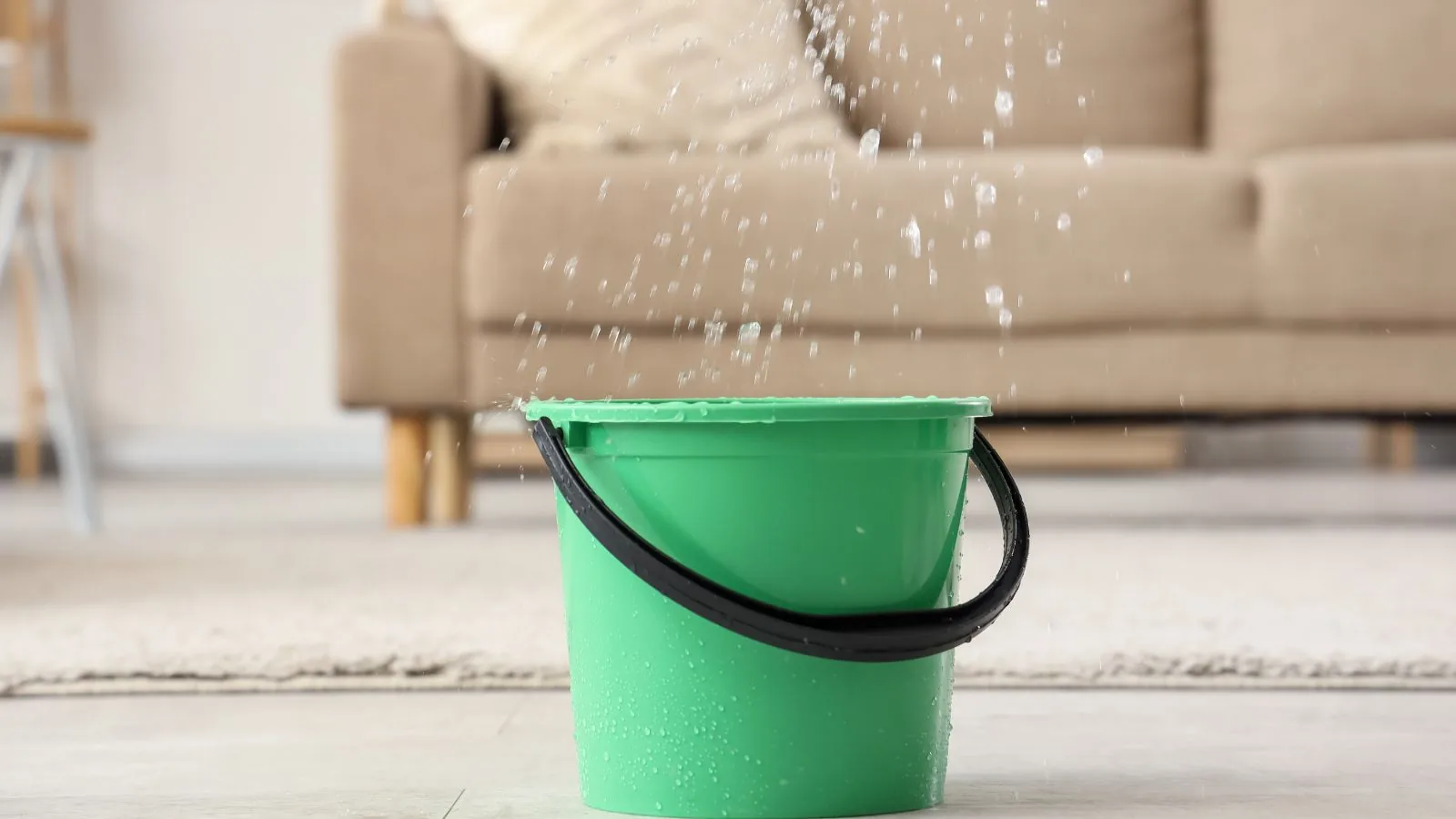
A ceiling that bulges or drips is an emergency, because trapped water can bring the drywall down. Our line is open 24/7. Move people and belongings out from under the spot, switch off any light fixture that is wet, and never poke the bulge from below while standing under it.
Where ceiling water comes from
Roof leaks
Rain enters at flashing, vents or worn shingles and runs along rafters before it shows.
Plumbing above
Bathroom, kitchen or laundry supply and drain lines on an upper floor drip into the ceiling below.
HVAC and attic equipment
Blocked condensate lines overflow into the ceiling cavity.
Condensation
Warm moist air meeting a cold attic surface collects as water.
Why a small stain can mean a large wet area
Water enters at one point and travels along joists and across the top of the drywall before it drips through. The stain may be several feet from the source. Insulation above the drywall holds water and keeps the ceiling wet long after the leak stops.
A bulging ceiling is holding water in a pocket. A trained technician relieves it through a small controlled opening so the water drains into a container, not onto the floor and not all at once.
Emergency ceiling water damage: steps before we arrive
- Clear the area below. Move furniture and electronics. Place a bucket under any drip.
- Stop the source if you can. Close the valve to an upper-floor fixture or turn off the appliance.
- Turn off wet lights and fans. Water in a fixture is a shock risk.
- Photograph and call. Take pictures of the stain, then call our line, open 24/7.
Ceiling repair options compared
| Condition | Approach | What it involves |
|---|---|---|
| Light stain, firm drywall | Dry and seal | Drying equipment, stain-blocking primer, repaint |
| Sagging or soft section | Cut out and replace | Remove the section, dry the cavity, patch, texture and paint |
| Wet insulation above | Remove and replace | Insulation holds water and loses value |
| Repeated leak | Fix the source first | Repair is wasted if water returns |
What affects the cost of ceiling repair
Cost depends on the size of the affected area, the ceiling type, how much insulation is wet and whether the source is accessible. A roofer or plumber handles the leak itself, and we handle drying and drywall. We explain the scope and price before work starts.
Roof leaks that end up as ceiling damage
Roof leaks are one of the most common sources of ceiling stains. Rain gets in at flashing around chimneys and vents, at damaged shingles, at valleys or through ice dams in winter. Water then runs along the roof deck and rafters before dripping through the ceiling, sometimes several feet from the opening.
A roofer repairs the roof, and the interior has to be dried too. Wet attic insulation and drywall keep damaging the house after the roof is fixed. We dry the ceiling and attic cavities and replace what cannot recover.
Look for a stain that grows after rain, damp insulation in the attic and daylight at roof penetrations. Ask your roofer to inspect after storms, since small openings let in a lot of water over time.
Painting and texture: getting a ceiling to look right
Once the cavity is dry and the drywall is patched, texture and paint decide how the repair looks. Popcorn and knockdown textures are matched as closely as possible, and a full ceiling coat of primer and paint avoids visible patches. Stain-blocking primer is used on any remaining marks.
Insurance note for ceiling damage
Insurers often ask where the water came from and whether it was sudden. Document the stain with dated photos, report promptly and keep any failed parts. Read your policy to see how roof, plumbing and storm leaks are treated.
If the leak came from a supply line, see burst pipe water damage. For moisture left inside walls below the ceiling, see wall and drywall water damage repair. After storms, storm water damage cleanup covers roof and wind-driven rain.
Under ANSI/IICRC S500, water that enters from above is described as a wider class of loss because it wets ceilings and walls as well as floors. That affects how much drying equipment a room needs.
Ceiling water damage questions
Yes. The line is open 24/7. Move people out from under the ceiling, place a bucket and call (732) 352-9660.
No. Trapped water adds weight, and the drywall can collapse suddenly. Keep clear until the ceiling is relieved and inspected.
Only if it is dry and the source is fixed. Paint over a wet ceiling traps moisture, and the stain usually returns.
It can if the cavity stays wet. The EPA advises drying within 24 to 48 hours. If you see mold, our mold remediation page explains next steps.