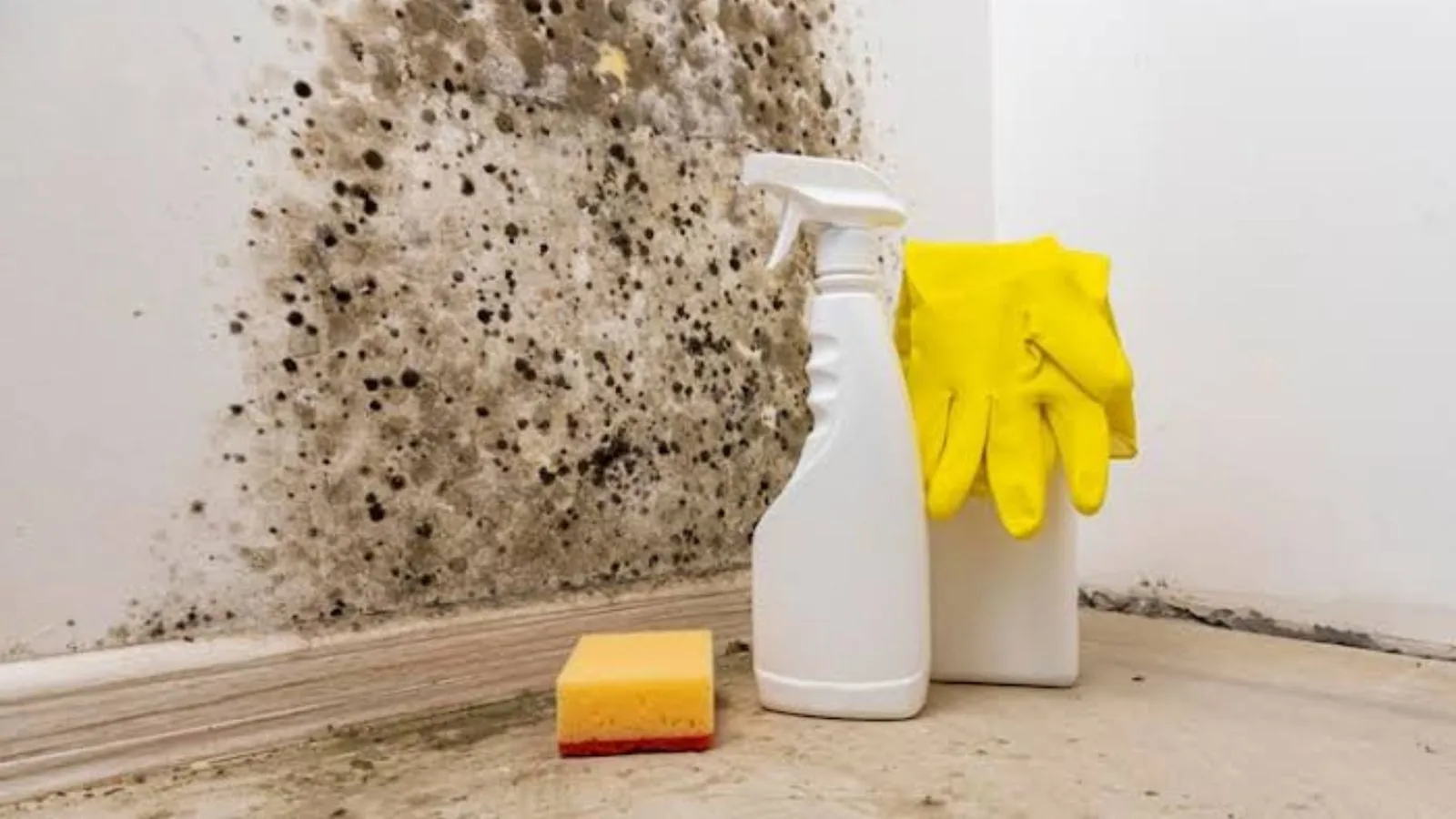
After a leak or flood, the common question is how long you have before mold starts. The EPA gives a practical rule: dry wet materials within 24 to 48 hours. That is a guide for acting quickly, not a precise countdown for every material.
Why the 24 to 48 hour window exists
Mold spores are everywhere indoors and outdoors in small numbers. They need moisture, food and suitable conditions to grow. Wet drywall paper, wood, carpet and insulation provide food. When these stay wet for a day or two, growth can begin.
A rough timeline after water damage
| Time since the water | What is typically happening | What to do |
|---|---|---|
| First hours | Water soaks into porous materials | Stop the source and remove standing water |
| Day 1 to 2 | Materials stay wet and the window is open | Start drying, remove soaked items |
| Days 3 to 7 | Growth can begin on wet surfaces | Keep drying, check hidden areas |
| Beyond a week | Visible growth and odors are possible | Assess size and call for help if needed |
Conditions vary. Warm, humid, poorly ventilated spaces speed growth.
What speeds up or slows down growth
- Material: paper-faced drywall, cardboard and untreated wood are favorable food sources.
- Temperature and humidity: warm, damp air favors growth.
- Airflow: still air in closets and wall cavities slows drying.
- Water type: contaminated water adds nutrients.
- Time: the longer materials stay wet, the more likely growth becomes.
Actions that stop mold early
- Remove standing water. See extraction methods in our service pages.
- Remove soaked porous items. Carpet pad, wet insulation and cardboard are the first to go.
- Dry the structure. Air movers and dehumidifiers bring down moisture in walls and floors.
- Measure. Moisture readings show whether materials are dry, not just feel dry.
- Watch for signs. A musty smell or discoloration after drying is a cue to look closer.
Drying is not the same as cleaning
If mold is already visible, drying alone does not remove it. Small areas on hard surfaces may be cleaned by the homeowner, following EPA guidance. Larger areas and porous materials need professional removal.
How different materials respond to being wet
| Material | Tendency when wet | Typical action |
|---|---|---|
| Paper-faced drywall | Paper facing is a favorable food source | Dry fast or cut out if soaked |
| Fiberglass insulation | Holds water, dries slowly | Remove if soaked |
| Solid wood | Absorbs slowly and dries slowly | Dry and monitor |
| Carpet and pad | Holds water and organic dust | Remove pad, dry or replace carpet |
| Concrete and tile | Not a food source | Clean and dry |
| Cardboard and paper goods | Absorbs quickly | Discard if soaked |
Common mistakes while waiting for help
- Closing doors and leaving wet rooms unventilated.
- Running a heater in a wet room, which can raise humidity.
- Painting or recarpeting before the materials are dry.
- Assuming that a dry-looking surface is dry inside.
- Ignoring a musty smell after cleanup.
Humidity targets that help
The EPA advises keeping indoor humidity below 60 percent and ideally between 30 and 50 percent. A basic hygrometer costs little and tells you how a room is doing. If readings stay high, ventilate, run a dehumidifier or look for a hidden moisture source.
Myths about the mold timeline
A common myth is that mold appears only after weeks. Growth can start earlier if materials stay wet and conditions are warm and humid. Another is that mold cannot start if the surface looks dry. A wall can look dry while its inside stays wet.
A third is that bleach prevents growth after a flood. Moisture control, not a chemical, is what prevents growth.
A simple checklist for the first two days
- Stop the water source.
- Remove standing water.
- Pull out soaked pad, insulation and cardboard.
- Run dehumidifiers and fans to move air.
- Take moisture readings, or ask a professional to.
- Check back in a few days for odor or discoloration.
Why hidden spaces are the real risk
Visible wet carpet gets attention, and the damage you cannot see gets forgotten. Wall cavities, the space under cabinets, the area behind baseboards and ceiling cavities hold water out of sight and out of airflow. Insulation inside them acts like a sponge.
These spaces are where growth is most likely to develop unnoticed. A thermal camera and a moisture meter can show wet spots behind finished surfaces, and small inspection holes let air movers dry the cavity.
If a leak or flood touched a wall, ask whether the cavity was opened or measured. A wall that was only wiped on the surface may still be wet inside, and the question to ask is what the readings were, not whether it looks dry.
A scenario: a leak found after a weekend away
A family returns from a weekend trip to find water on the kitchen floor from a failed dishwasher line. They stop the water, soak up the standing water and run fans. They call for help on the same day, and moisture readings show that the toe kick and the lower wall are still wet.
The crew opens the toe kick, sets a small drying system and checks the readings daily. The materials reach dry readings within the next several days. Because drying began in the first day or two, there is no growth to remove. Delay would have changed that outcome.
How fast conditions can change after heavy rain in New Brunswick
When the Raritan overtopped its banks during Hurricane Ida in 2021, the Rutgers NJ Weather Network recorded 8.44 inches of rain in six hours. Flooding at that scale leaves basements and first floors wet for days if drying is delayed.
After any major rain, check low areas of the house for damp walls and carpet within the first two days. Early drying matters more than the choice of cleaning product.
If drying equipment is needed, see structural drying. If growth has already appeared, read about mold remediation.
Sources for this guide: the EPA guidance that wet materials be dried within 24 to 48 hours, the EPA humidity guideline, and the Rutgers NJ Weather Network rainfall record for Hurricane Ida.
Mold timeline questions
It is possible in some conditions, but the EPA guidance of 24 to 48 hours is a practical window for drying.
Growth is more likely. Inspect hidden areas and consider assessment and removal of affected materials.
No. Moisture control is what stops regrowth.
Yes, if the cavity stays wet. A musty smell and moisture readings are clues.
Moisture meter readings compared with dry reference materials show it. A restoration company can document this.