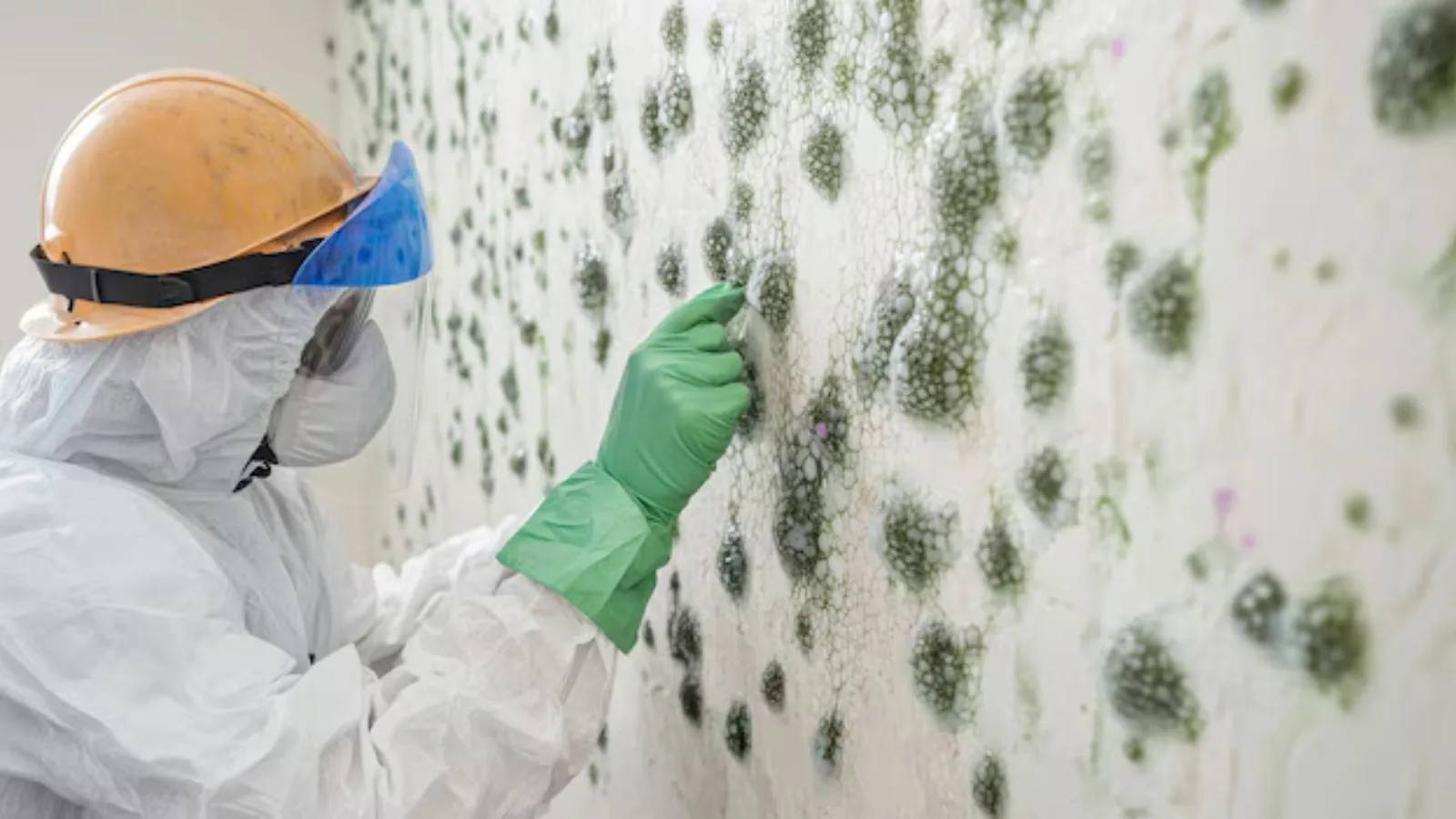
Wood is a natural food source for mold, so it shows up on wood trim, joists, decks and furniture after moisture problems. Whether you can clean it yourself depends on how deep the growth goes and how large the area is. This guide follows the EPA's general advice.
Fix the moisture first or the mold returns
Cleaning mold off wood while the wood is still wet or a leak is still active only buys a short rest. Find the water source, repair it and dry the area. The EPA notes that moisture control is the key to mold control.
When it is reasonable to clean mold off wood yourself
The EPA says small areas of about 10 square feet or less can usually be handled by the homeowner. That fits surface mold on sealed or solid wood such as trim, a bench or a deck rail. It does not fit mold inside walls, in an HVAC system or following contaminated water.
A careful cleaning approach
- Protect yourself. Wear gloves, eye protection and a mask rated for the job. Open a window and keep other people away.
- Dry the surface. Use a dehumidifier and fan until the wood is dry to the touch.
- Vacuum with HEPA if possible. This removes loose spores before wiping.
- Wipe with detergent and water. Scrub gently and wipe with clean water. Avoid soaking the wood.
- Dry fully and check. If staining or growth returns, the wood may still be damp or the growth may go deeper.
Do not mix cleaning chemicals
Never mix bleach with ammonia or other cleaners, because the fumes are dangerous. Bleach also does little for mold that has soaked into porous wood. Detergent and water, with drying, handles most surface cases.
Raw, sealed and structural wood compared
| Type of wood | Typical approach | Why |
|---|---|---|
| Sealed trim or furniture | Clean and dry | Surface growth is easier to reach |
| Unfinished or raw wood | Clean, sand lightly or replace | Mold can soak into the grain |
| Structural joists and studs | Assess before cleaning | Depth and moisture decide the plan |
| Soft or rotted wood | Replace | The material has lost strength |
When to stop and call a professional
- The area is larger than about 10 square feet.
- The wood feels soft, crumbles or has a deep stain.
- Mold is in the attic, crawl space or inside a wall.
- Cleaning has not stopped regrowth.
- The moisture came from floodwater or sewage.
Cleaning mold on decks, fences and outdoor wood
Outdoor wood grows algae and mold in shaded, damp spots. A stiff brush, detergent and water usually handles surface growth, and a rinse with a hose finishes the job. Let the wood dry in the sun, and trim plants that keep it shaded and damp.
Pressure washing can damage soft woods, so use low pressure and keep the nozzle moving. Sealing the wood after it dries helps it shed water.
Wood that cannot be saved
- Wood that is soft, spongy or crumbles when probed with a screwdriver.
- Structural members with deep staining and ongoing moisture.
- Particleboard or fiberboard that has swollen.
- Wood that smells strongly after cleaning and drying.
Replacing a damaged board is often cheaper and safer than trying to save it. If a structural beam or joist is involved, have a qualified contractor assess it.
Keeping wood dry after cleaning
Mold returns when moisture does. Fix leaks, direct downspouts away from the building, keep crawl spaces and basements ventilated or dehumidified and avoid storing wood against damp walls. A moisture meter helps you confirm that wood is dry before you seal or paint it.
Myths about mold on wood
A common myth is that painting over mold fixes it. Paint hides the growth and can trap moisture, so the problem usually returns. Another is that bleach penetrates wood and kills everything inside. Wood is porous, and bleach mostly stays near the surface.
A third is that all dark stains on wood are mold. Water stains, tannins and rot can look similar, so check with a moisture meter and by probing the wood.
Checklist before you start
- Is the water source fixed?
- Is the affected area smaller than about 10 square feet?
- Is the wood solid and sealed, not soft or crumbling?
- Do you have gloves, eye protection and a mask?
- Can you ventilate and keep others out of the area?
Cleaning mold on wood furniture and trim
Furniture usually has a finish that makes surface mold easier to remove. Take the piece outside if you can, brush off loose growth, then wipe with a cloth dampened with detergent and water. Dry it in a ventilated area, ideally with some sunlight and airflow.
Unfinished or antique pieces need more care, because water and scrubbing can harm the wood. If the piece has real value, ask a conservator or a furniture restorer before you start.
For trim and baseboards that are part of the house, check behind them. Mold on the face of a baseboard often means moisture in the wall. Remove a small section if needed to look and measure.
Wood, humidity and old buildings in New Brunswick
The Livingston Avenue Historic District was listed on the National Register of Historic Places in 1996, and the city has many older buildings with original wood trim, floors and framing. Older wood can hold moisture where air does not move, such as behind built-in cabinets or in closets on exterior walls.
Basements that took on water during Hurricane Ida in 2021 may still have damp framing in corners. A moisture meter can show whether wood is truly dry.
If you find growth you cannot manage, read about mold remediation. For wet joists below a house, see crawl space water damage.
Sources for this guide: the EPA guidance on mold, moisture and your home, which sets the roughly 10 square foot guideline for homeowner cleanup, and the ANSI/IICRC S520 standard for professional remediation.
Mold on wood questions
Bleach mostly acts on the surface and does little for mold that has soaked into the grain. Detergent, water and thorough drying are a safer first approach.
Light sanding of sealed surface growth is sometimes done, but it can spread spores. Use protection and a HEPA vacuum, or call a professional.
No. Water stains and mold look similar. A moisture reading and a close look help tell them apart.
Fix the moisture source, dry the wood and keep humidity under control with ventilation or a dehumidifier.
Not by itself. Check for dampness, especially after leaks or flooding, and dry wet areas quickly.