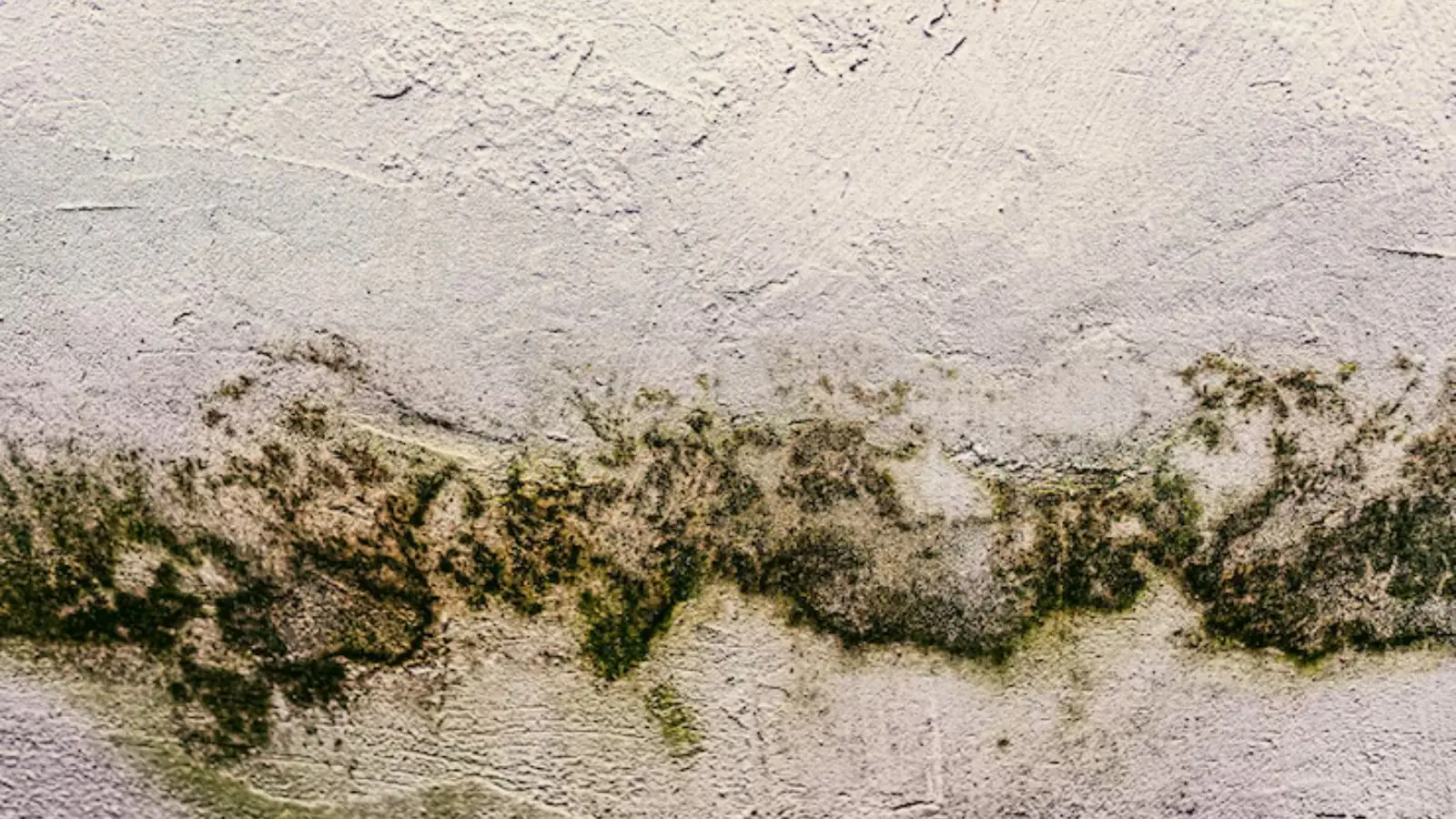
People use the words mold and mildew interchangeably, and in everyday life that is fine. For cleanup, the difference matters because mildew usually stays on the surface of a material while mold can grow into it. This guide gives simple ways to tell them apart.
Quick comparison
| Feature | Mildew | Mold |
|---|---|---|
| Color | White, gray or light yellow | Green, black, blue, brown or white |
| Texture | Flat, powdery or downy | Fuzzy, slimy or raised |
| Typical location | Bathroom walls, windows, fabrics | Drywall, wood, carpet, insulation |
| Depth | Surface growth | Can penetrate porous materials |
| Cleanup | Often cleaned with detergent and water | May need material removal |
Not every case fits the table. Some molds are white and some surface molds are dark, so use the table as a rough guide.
Where each tends to grow
Mildew shows up on shower walls, window frames, shower curtains and fabrics in humid rooms. Mold is more likely on drywall, wood, ceiling tile and carpet after water damage. Both need moisture.
How to clean light surface growth
- Reduce the moisture. Run the bathroom fan, open a window and fix drips.
- Protect yourself. Wear gloves, eye protection and a mask.
- Wash with detergent and water. Scrub gently and rinse with clean water.
- Dry completely. Wipe with a dry cloth or use a fan.
- Watch for return. Repeated growth means the moisture problem remains.
Do not mix bleach with ammonia or other cleaners. The EPA notes that small areas of about 10 square feet or less can usually be handled by the homeowner.
When it is not just mildew
- Growth covers more than about 10 square feet.
- The material is soft, crumbly or stained deeply.
- A musty smell persists after cleaning.
- Growth is inside walls or the ceiling.
- A leak or flood caused the wet conditions.
Common household spots and what to do in each
| Spot | Likely growth | First step |
|---|---|---|
| Shower walls and grout | Mildew or surface mold | Clean with detergent, dry, run the fan |
| Window sills and frames | Surface growth from condensation | Wipe, dry and reduce humidity |
| Under sinks | Mold if there is a slow leak | Fix the leak, dry the cabinet, check the wall |
| Basement walls | Mold, often with seepage | Find the source, dry and consider professional help |
| Closet corners on exterior walls | Mold from cold surfaces and still air | Improve airflow and insulation, clean small areas |
A simple prevention routine
- Run bathroom and kitchen fans during use and for a while after.
- Wipe down shower walls and doors after showers.
- Keep furniture a few inches away from exterior walls.
- Fix leaks as soon as you see them.
- Use a hygrometer and keep humidity in a healthy range.
Common misconceptions
Bleach is not the answer to every case. White growth is not always harmless, and black growth is not always the worst kind. Cleaning without fixing moisture does not last. Treat growth as a sign that something is wet and find out what.
How to decide what to do next
| What you see | Reasonable next step |
|---|---|
| A light film on shower tile | Clean, dry and improve ventilation |
| Spots on a window sill | Wipe, then reduce condensation |
| Fuzzy patches on drywall | Check moisture, consider professional assessment |
| Growth that returns after cleaning | Look for a hidden leak or high humidity |
| A large area or a musty smell throughout | Call a remediation company |
Key takeaways
- Mildew and mold both signal moisture.
- Surface growth on hard surfaces is easier to clean.
- Growth in porous materials may need removal.
- Fix the moisture or the growth comes back.
Why bathrooms get growth first
Bathrooms combine warm air, high humidity and surfaces that stay wet after a shower. Grout is porous, caulk shrinks with age, and steam condenses on cold exterior walls and on the ceiling. A small fan that is switched off as soon as the shower ends does not clear the moisture.
Running the fan for at least twenty minutes after a shower, leaving the door open and squeegeeing the glass cut the time that surfaces stay wet. If growth keeps returning despite these steps, look at the fan's duct. A disconnected or blocked duct dumps humid air into the attic instead of outside, which can start growth in a place nobody sees.
Window condensation is a similar story. Water that runs down a cold window and pools on the sill soaks the trim. Wipe it up and look for ways to cut humidity, such as using exhaust fans when cooking and moving damp laundry out of the living space.
A scenario: spots on a bathroom ceiling
A homeowner sees gray spots on the bathroom ceiling above the shower. She wipes them with detergent and water, and they return within a month. A check of the fan shows the duct has come loose in the attic, so steam goes into the attic instead of outside.
Reconnecting the duct and cleaning the ceiling solves the problem. The lesson is the same as in every case. When growth returns after cleaning, the cleaning was not the failure. The moisture source was still there.
Humid rooms and rentals in New Brunswick
Bathrooms in older apartments and rentals near Rutgers often have small fans and limited windows, which makes surface growth more common. Tenants who see recurring growth should tell the landlord in writing, since a failing fan, leaking pipe or roof issue may be behind it.
After Hurricane Ida in 2021 flooded parts of the city, many people checked basements for dark growth. Baseboards, drywall bases and stored cardboard are the first places to look.
If growth is larger than a small patch, read mold remediation. If dampness remains in walls or floors after a leak, see structural drying.
Sources for this guide: the EPA guidance on mold, moisture and your home, including its humidity guideline and the roughly 10 square foot homeowner guideline.
Mold versus mildew questions
It is often easier to clean because it stays on the surface. Both signal moisture that should be controlled.
Not reliably. Color and texture give clues, but only laboratory analysis identifies species.
Usually not for cleanup decisions. Moisture control and size of the area matter more.
The EPA suggests keeping indoor humidity below 60 percent, ideally between 30 and 50 percent.
A remediation company can assess hidden moisture and remove growth that goes beyond the surface.