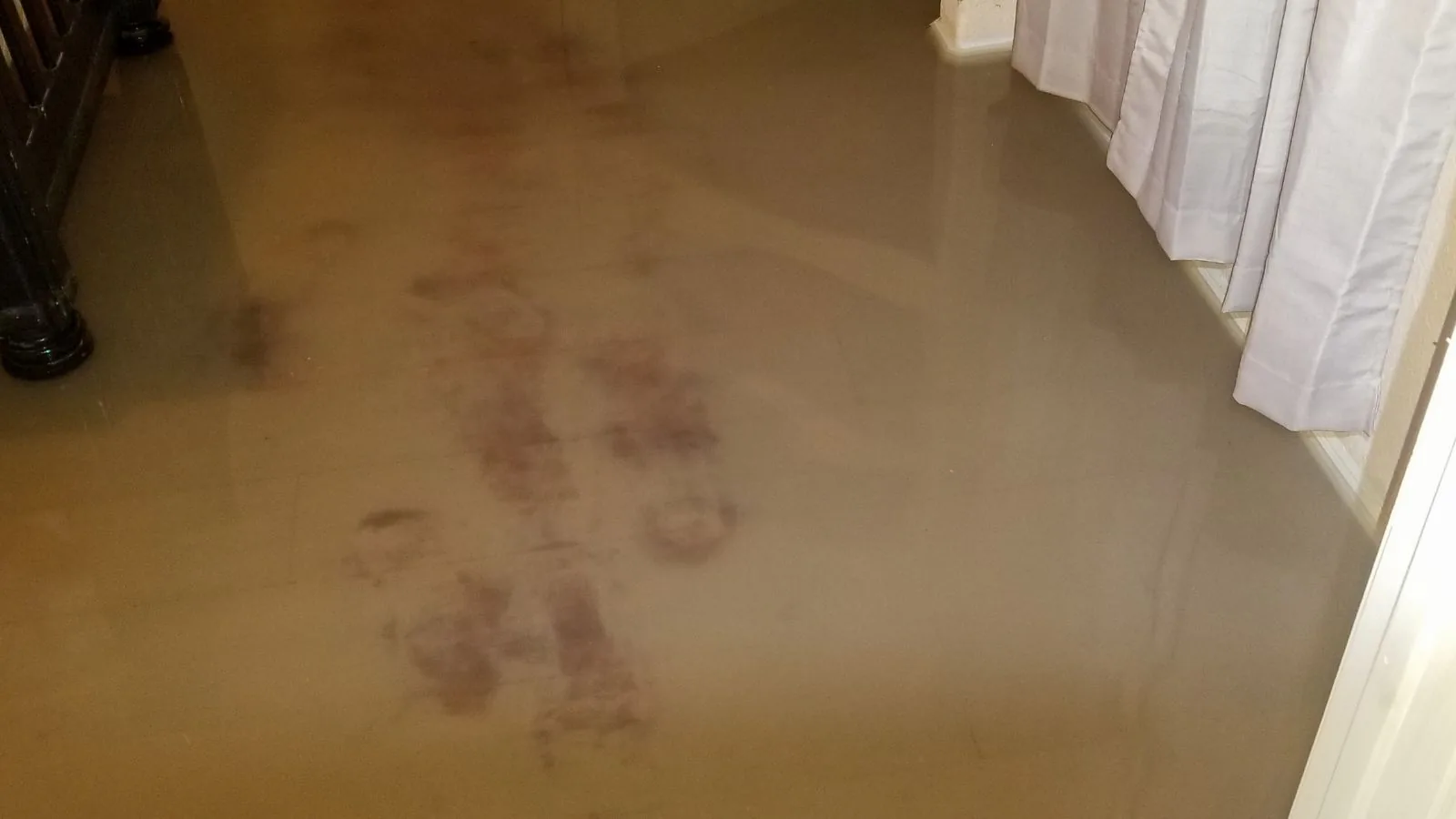
Restoration professionals sort water into three categories based on how contaminated it is. The categories come from the IICRC S500 standard. They affect what can be dried, what must be removed and what protective gear workers use.
The three categories in plain language
| Category | Common name | Examples | Typical handling |
|---|---|---|---|
| 1 | Clean water | Supply line break, broken water heater line, rain through a roof (before contact) | Many materials can be dried |
| 2 | Gray water | Washing machine or dishwasher discharge, toilet overflow with urine only, aquarium | Dry or remove depending on time and material |
| 3 | Black water | Sewage, river flooding, water from outside that has touched soil | Remove porous materials, sanitize |
Category 1: clean water
Water from a pressurized supply line, such as a burst pipe, is clean at the source. In New Brunswick, tap water is surface water supplied by the New Brunswick Water Utility. Clean water is the simplest to handle, but it does not stay clean if it sits.
Category 2: gray water
Gray water has some contamination that could cause discomfort if people contact it. Examples are washer discharge, dishwasher overflow and sump pump failure. Porous materials may need removal, depending on how long they stayed wet.
Category 3: black water
Black water is grossly contaminated. Sewage, flooding from rivers and streams and any water that has come from the ground are in this group. Carpet, pad, insulation and drywall that touched it are normally removed. Workers wear protective gear.
Water categories change over time
Clean water that sits for 48 hours or more, or that touches dirty surfaces, can move to a higher category. A Category 1 leak left for days in a warm basement may be handled as Category 2 or 3. That is another reason to act quickly.
Why the category affects cost and insurance
Higher categories mean more removal, more protective equipment and more time to sanitize.
Insurers may also treat causes differently, such as flood versus a pipe break. Check your policy.
Categories are not the same as classes
| Class | What it describes | Example |
|---|---|---|
| Class 1 | Small area, little wet material | A small spill on a floor |
| Class 2 | Larger area, carpet and cushion wet | A leak into a carpeted room |
| Class 3 | Water from above, walls and ceiling wet | A roof leak or an upstairs pipe break |
| Class 4 | Deeply held water in dense materials | Hardwood, plaster or concrete soaked for days |
Category describes how contaminated the water is. Class describes how much is wet and how hard it is to dry. A job has both, such as Category 1 and Class 3.
How time and temperature can change a category
Water that sits in warm, dirty spaces picks up bacteria quickly. A clean-water leak in a closet that stays warm for several days can be handled as Category 2. That is why the answer on day three is different from the answer on day one.
What you can do while waiting for help
- Stop the source if it is safe.
- Keep children and pets away from the water.
- Do not use household fans to dry contaminated areas, because they can spread contamination.
- Photograph the water and the source.
- Tell the restoration team what the water touched, such as the toilet, soil or a drain.
Myths about water categories
One myth is that clean water is always safe to leave. Clean water can turn contaminated if it sits or contacts dirty surfaces. Another is that gray water can be mopped up like a spill. It may carry bacteria that call for protective gear and proper disposal.
A third is that rainwater is clean. Rain that has run across a roof or through a yard can carry dirt and debris.
Key takeaways
- Category 1 is clean, 2 is gray and 3 is black water.
- Time and contact with dirty materials can raise a category.
- Category 3 water means porous materials are normally removed.
- Tell the restoration team what the water touched.
How restoration crews use the category on a job
On arrival, a technician asks where the water came from, how long it has been there and what it touched. They look at the water, smell it and may test it. The answers set the category, and the category sets the plan.
- For Category 1, crews extract the water, dry the structure and clean as needed.
- For Category 2, crews extract, remove materials that cannot be cleaned and treat surfaces.
- For Category 3, crews wear protective gear, remove porous materials, sanitize and dry.
The category can be raised during the job if conditions change. For example, a supply line leak that looked clean may reveal contaminated insulation or sewage in the wall. A good crew explains the change and updates the scope before continuing.
A scenario: a washing machine overflow
A washing machine drain hose slips out of the standpipe and releases several gallons onto a carpeted laundry room. The water is Category 2, since it carries detergent and soil from the clothes. If the carpet is dried quickly it may be cleaned, and if it stays wet for a couple of days it is more likely to be removed.
The same overflow caught within hours and the same overflow found after a weekend lead to two different plans. That is the practical meaning of category and time together.
Categories in New Brunswick: Ida and the Raritan
During Hurricane Ida in 2021, the Raritan River overtopped its banks, which closed Route 18, River Road and the Albany Street Bridge. Water that comes from a river that flooded is Category 3 by definition, because it picks up sewage, soil and chemicals along the way.
A burst supply line in an apartment near Rutgers is a Category 1 event at first. The difference between those two situations shapes the whole cleanup.
To see how each category is handled, read flood damage cleanup and sewage backup cleanup.
Sources for this guide: the ANSI/IICRC S500 standard, which defines the water categories and classes, and the City of New Brunswick water quality information for the local supply.
Water category questions
The restoration company assesses it on site, based on the source, the time since the loss and the materials affected.
It can become contaminated if it sits, mixes with dirt or touches contaminated materials.
Rain that enters through a roof is often treated as clean at first but can pick up debris. Water that rises from the ground is Category 3.
Coverage depends on the cause and your policy, not the category by itself. Check your policy.
Class describes how much material is wet and how quickly it dries, and is separate from category, which describes contamination.