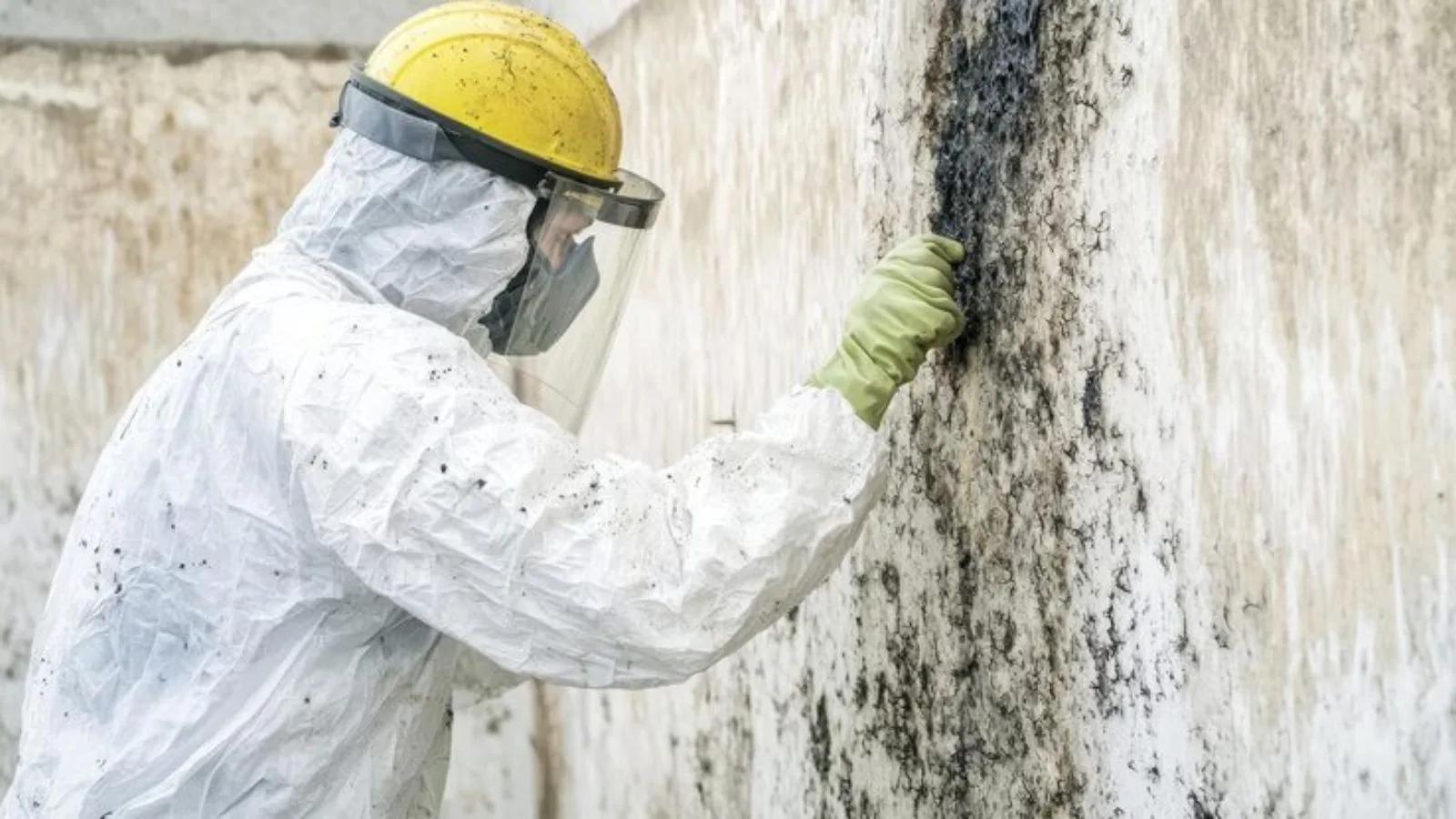
People search for the smell of black mold because the odor often shows up before the growth does. The usual description is musty, earthy and damp, like a wet basement or old towels left in a bag. This guide explains the smell, what else can cause it and what steps make sense.
How people describe the smell
- Musty or stale, like a closed damp room.
- Earthy, like wet soil or rotting leaves.
- Sour, like a wet cloth that did not dry.
- Stronger when the air is humid or when a heating or cooling system starts.
The smell comes from gases that some molds release as they grow. The odor tells you moisture and organic material are present. It does not tell you which kind of mold it is.
Black mold is a color, not a diagnosis
Many molds look dark green, brown or black. Stachybotrys is the species people usually mean by black mold, but color alone cannot identify it. Only laboratory analysis can name a species. For cleanup decisions, the size of the area and the cause of moisture matter more than the name.
Questions about how mold affects a particular person belong with a physician. This guide does not offer health advice.
Other things that smell like mold
| Source | Why it smells musty | How to check |
|---|---|---|
| Wet carpet or pad | Moisture trapped in fibers and foam | Moisture meter, lift a corner of the carpet |
| Dirty AC coil or drain pan | Standing water and debris | Inspect the unit and the drain |
| Damp towels and laundry | Slow drying in humid rooms | Wash and dry, ventilate the room |
| Plumbing leak in a wall | Wet drywall and framing | Thermal imaging, moisture meter |
| Dry rot | Fungal decay in wood | Probe the wood for softness |
Where to look when you smell something musty
Follow the smell to its strongest point. Check under sinks, behind toilets, around windows, in closets on exterior walls and along basement walls. Look at ceiling corners and the area under the stairs. Smell near vents and registers, since air can carry odor from another room.
Do not cut open walls on a guess. A moisture meter and a thermal camera can find wet areas without destroying finished surfaces.
What to do next
- Find and stop the moisture. A mold smell with an active leak will get worse until the water is fixed.
- Dry the area. Use fans and a dehumidifier. Remove wet materials such as soaked carpet or cardboard.
- Check the size. The EPA says about 10 square feet or less can usually be handled by the homeowner on hard surfaces.
- Call a professional for larger or hidden growth. Containment and air filtration keep spores from spreading.
Why a musty odor can come and go
Odor changes with temperature, humidity and airflow. A smell may appear when the air conditioner starts, after a shower or on a humid day, then fade. That pattern often points to damp materials near an air path, such as a wall cavity beside a duct.
A smell that comes and goes is still worth tracking down. Moisture that is only occasionally active can keep materials damp enough for growth.
What air fresheners and ozone machines do and do not do
Air fresheners cover odors without removing the cause. Ozone and similar machines are sold for odor control, but they do not fix moisture, and people should stay out of rooms where they run. Source removal and drying are what end a mold odor.
Documenting a smell for a landlord or insurer
- Note when and where you smell it. Keep a short log with dates and rooms.
- Photograph stains and visible growth. Include a ruler or coin for scale.
- Take moisture readings if you can. An inexpensive meter helps, and a professional reading is stronger.
- Write it down. Send the landlord or insurer a dated message, not just a phone call.
- Keep copies. Save replies and any repair invoices.
Common myths about black mold
One myth is that you can identify black mold by smell alone. Odor tells you that something is damp, not what species is present. Another is that black color always means the most serious kind. Many molds are dark, and color does not identify a species.
A third myth is that a home with no smell has no mold. Mold inside a closed wall may not produce a strong odor, so moisture readings and a visual check matter.
Quick summary
- A musty, earthy smell points to damp materials, not a specific mold.
- Find and fix the moisture before anything else.
- Small areas can be handled by the homeowner on hard surfaces.
- Hidden or larger growth calls for professional help.
Using a moisture meter to follow the smell
A moisture meter is an inexpensive way to turn a smell into a location. Pinless meters scan the surface of walls and floors, and pin meters read a specific spot. Move along the wall slowly and note where readings climb above the dry reference.
Compare readings with a part of the same material that you know is dry. A single number means little by itself, and the difference is what counts. Try the baseboard, the lower wall, the corners and the area beneath windows.
If you find a wet spot, look for the source nearby, such as a pipe, a window leak or a roof line above. Repair it and dry the area before you worry about the odor itself.
Musty basements and older rentals in New Brunswick
Basements and first floors that took on water in Hurricane Ida in 2021 can hold odor long after the cleanup if framing or drywall stayed damp. In neighborhoods such as Edgebrook and Westons Mills, a basement smell after heavy rain is a prompt to check for seepage.
Renters near Rutgers should report a persistent musty smell to the landlord in writing and take dated photos. Tell the landlord where the smell is strongest, since that points to the source.
If a smell leads you to visible growth, see mold remediation. If the cause is lingering moisture in walls or floors, read about structural drying.
Sources for this guide: the EPA guidance on mold and moisture, and the ANSI/IICRC S520 standard for professional mold remediation. Health questions belong with a physician.
Black mold smell questions
No. Wet carpet, dirty AC drains, damp laundry and plumbing leaks can all smell musty. A moisture reading and a visual check help find the cause.
Home kits can detect spores but cannot tell you what to do. A visual inspection and moisture readings are usually more useful.
This guide does not give health advice. If you have symptoms or concerns, talk to a physician.
It fades when the moisture source is fixed and affected materials are dried or removed. Deodorizing alone does not solve it.
Rain raises ground moisture and humidity. A basement that already has damp surfaces gives off more odor when conditions are wet.